





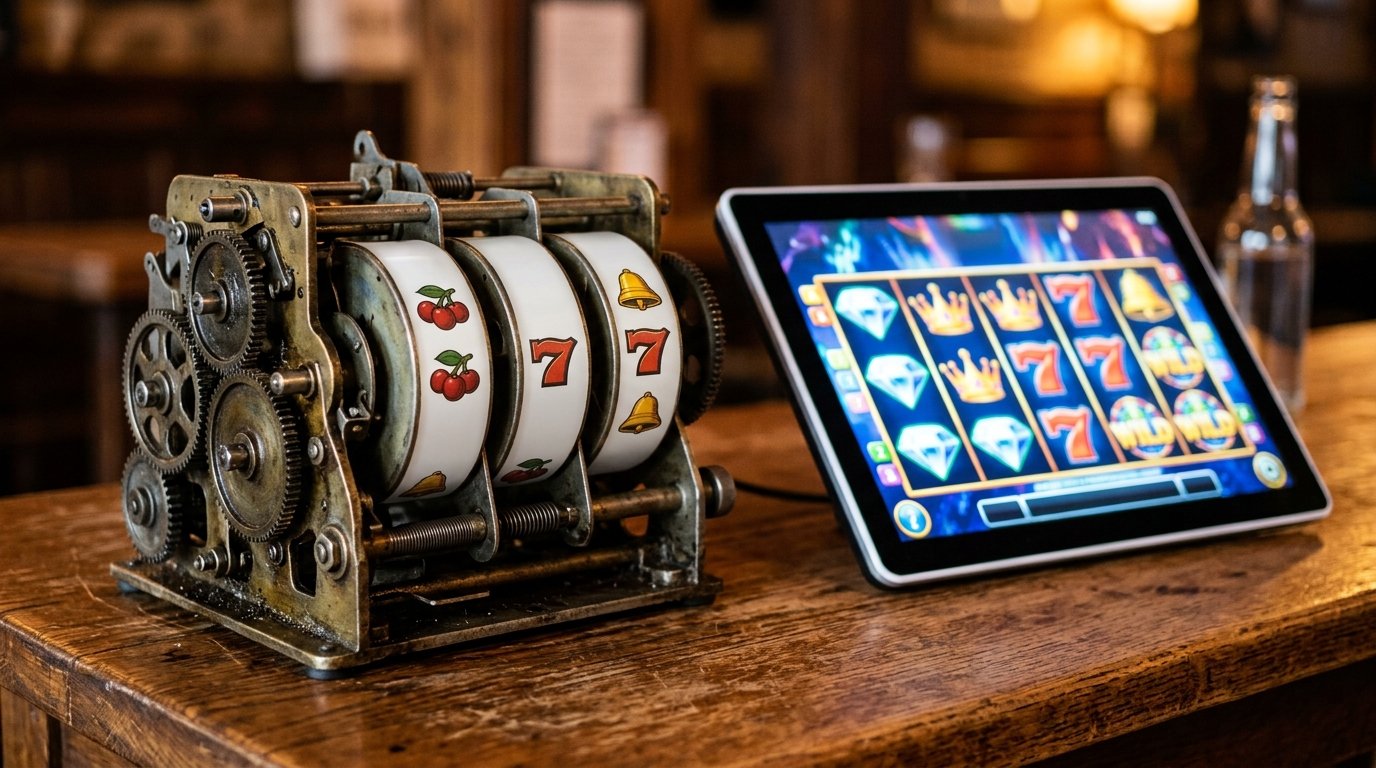
Quick Answer: A handful of slot machines didn’t just entertain players — they rewrote the rules of casino gambling itself. From the first coin-operated reel machine to the software that powers today’s digital jackpots, these ten innovations changed how odds, payouts, and player experience work. Understanding them helps you read any modern slot with confidence.
You’ve probably played a slot machine without ever wondering why it works the way it does. Why does one machine have three reels and another have five? Why do some jackpots grow while you play, and others stay fixed? The answer traces back to a small number of machines that changed gambling forever, each one solving a problem the industry didn’t even know it had yet.
This guide walks you through those ten pivotal machines, the mechanics behind them, and the terminology you need to actually understand what you’re looking at next time you see a slot floor — physical or digital. You’ll learn how these designs work, where beginners typically get confused, and how to separate the myths from the facts.
What Are the “10 Slots” That Changed Gambling Forever (and Why Beginners Struggle With Them)
When people talk about the machines that changed gambling forever, they usually mean a specific lineage of technical breakthroughs, not just popular games. Beginners often struggle here because slot history gets flattened into “old machines” versus “new machines,” when really each innovation solved one specific mechanical or mathematical problem.
The ten landmark developments generally include:
- The first fully automatic payout mechanism (1895)
- The first electromechanical machine with a bottomless hopper (1963)
- The first video-based slot display (1976)
- The first machine using a random number generator instead of physical reels
- The first multi-line, multi-coin format
- The first linked progressive jackpot network (1986)
- The first slot with an interactive bonus round
- The first licensed online slot (1994)
- The first mobile-native slot app
- The first AI-adjusted, data-personalized slot experience
Why does this confuse beginners? Because each innovation changed a different layer of the machine — sometimes the physical hardware, sometimes the math behind the odds, sometimes just the screen. If you don’t separate those layers, “how slots work” starts to feel like one big blur instead of ten distinct, learnable ideas.
How These Landmark Slot Machines Actually Work: The Mechanics Explained
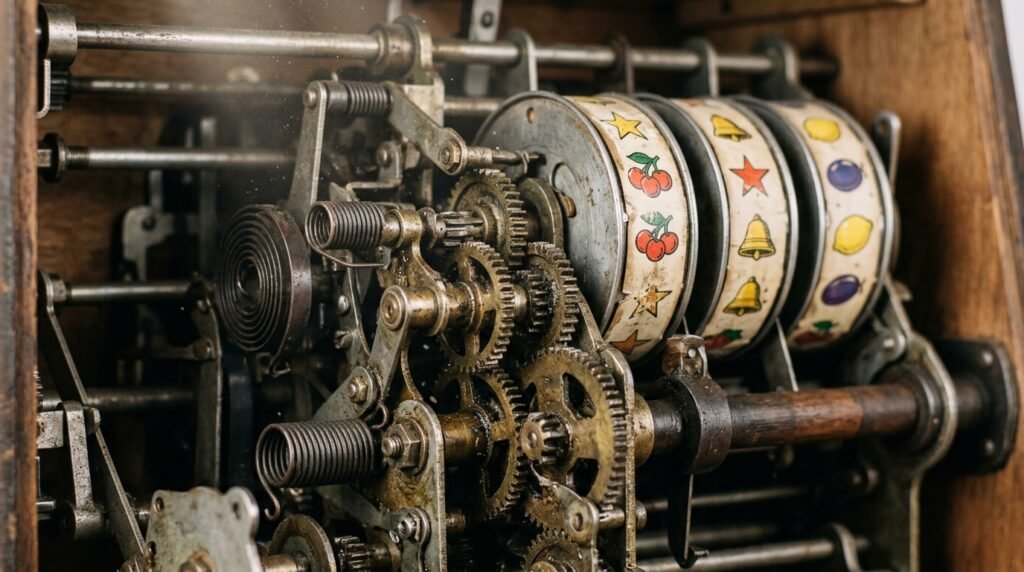
Every one of these ten machines works by combining three core systems: an input (a lever, button, or touchscreen), a randomization method (physical reels or software), and a payout logic (a fixed table or a dynamic algorithm). What changed over time is which part got upgraded.
The earliest mechanical slots used physical stops on spinning reels — a purely mechanical randomizer. When electromechanical machines arrived, motors and sensors took over reel stopping, but the odds were still tied to physical reel strips. The real turning point came when random number generators (RNGs) replaced physical reels entirely. An RNG is software that produces thousands of number sequences per second; the moment you press spin, it locks in a result instantly, and the visual reels are just an animation showing you that result.
This is the single most important mechanical shift in slot history. Once odds lived in software instead of steel reels, developers could add far more symbols, paylines, and bonus conditions without needing more physical space. That’s what made 20-payline video slots, multi-level bonus rounds, and networked progressive jackpots technically possible.
The Rules Behind These Innovations, Step-by-Step
Understanding how each landmark machine functioned is easier when you break it into a simple sequence:
- Input stage — A lever, button, or tap tells the machine to start a spin.
- Randomization stage — Either physical reels stop mechanically, or an RNG selects a result instantly.
- Symbol mapping — The random result is mapped to specific symbols on a virtual or physical reel strip.
- Payout check — The machine compares the symbol combination against a payout table.
- Bonus trigger check — If the combination matches a bonus condition, a secondary feature activates.
- Jackpot contribution — On progressive machines, a small percentage of activity feeds a shared jackpot pool.
- Display stage — The result is shown to the player, sometimes with animation or sound design.
- Reset stage — The machine returns to a ready state for the next spin.
Pro Tip: If you ever want to understand a specific slot’s mechanics, look for its published RTP (return to player) percentage and volatility rating rather than guessing from the visuals alone.
Every one of the ten historic machines altered one or more of these eight steps. The 1976 video display change only affected step seven. The RNG shift affected steps two and three. The progressive jackpot network affected step six. Once you see it this way, slot history stops looking random and starts looking like a series of targeted upgrades.
Common Beginner Mistakes When Learning Slot Mechanics and History
Most beginners make the same handful of errors when trying to understand how these landmark machines relate to modern slots.
First, people assume that video slots and RNG-based slots are the same innovation. They’re not. Video display technology changed how a spin looks; RNG technology changed how a spin is calculated. A machine can have a video screen and still be tied to older reel-strip math, though this is now rare.
Second, beginners often think a “linked” or “networked” progressive jackpot pays out more often than a standalone one. In fact, linked jackpots usually pay out less frequently, precisely because more machines and more players are contributing to one shared, larger prize pool.
Third, people assume bonus rounds are just decorative. In reality, the introduction of interactive bonus rounds changed the underlying math models developers use, since bonus-round payouts had to be built into the overall RTP calculation rather than treated as a separate feature.
Slot Machine Terms and Terminology Explained
To follow slot history — or read any modern machine’s rules — it helps to know this core vocabulary:
- RNG (Random Number Generator): Software that determines spin outcomes instantly and independently of previous spins.
- RTP (Return to Player): The theoretical percentage of wagered money a slot returns to players over a very large number of spins.
- Volatility (or variance): How often and how large a slot’s payouts tend to be — low volatility means smaller, more frequent wins; high volatility means rarer, larger wins.
- Paylines: The specific patterns across the reels that count as winning combinations.
- Hopper: The mechanical coin-storage unit used in early electromechanical machines, first automated in 1963.
- Progressive jackpot: A prize pool that grows as a percentage of every wager across one or many linked machines.
- Reel strip: The physical or virtual sequence of symbols mapped to a reel.
Pro Tip: When you see a slot advertised with a specific RTP, that number reflects long-term statistical behavior, not a guarantee for any single session.
Tips for Understanding Slot Mechanics Like a Pro
You don’t need a math degree to understand slot design at a meaningful level — you just need to know what to look for.
Start by identifying which era’s mechanics a given machine borrows from. Does it use a fixed payout table (older, reel-strip logic) or a dynamic RTP disclosure (modern RNG logic)? Next, check whether the jackpot is standalone or networked; this tells you whether the prize pool depends on one machine’s activity or thousands of machines across a region.
It also helps to read volatility ratings the way you’d read a weather forecast: they describe a pattern over time, not a promise about your next spin. A high-volatility machine descended from the interactive bonus-round innovation will typically show long stretches without a bonus, followed by a larger payout when the bonus triggers.
Pro Tip: Treat RTP and volatility as descriptive labels for understanding a machine’s design, not as tools for predicting individual outcomes.
Finally, pay attention to how a machine’s paytable is structured. Multi-line formats — one of the ten landmark innovations — often display payout information per line and per total bet, which can be confusing if you’re used to single-line formats. Reading the paytable carefully is the fastest way to understand any slot’s actual mechanics, regardless of its era.
Myths vs Facts About These Landmark Slot Innovations
Myth: The first automatic payout machine paid out purely based on luck with no fixed structure.
Fact: Even the earliest automatic machines used a fixed mechanical payout table tied to specific reel symbol combinations.
Myth: RNG software makes results less fair than physical reels did.
Fact: RNGs are independently tested and certified by regulatory bodies specifically to ensure statistical fairness, often to a higher verifiable standard than old mechanical reels allowed.
Myth: A machine is “due” for a jackpot after a long dry spell.
Fact: Each spin on an RNG-based machine is statistically independent of the last, meaning previous outcomes have no bearing on future ones.
Myth: Video slots and RNG slots are the same innovation.
Fact: They are separate developments — one changed the display technology, the other changed the underlying odds calculation.
Myth: Networked progressive jackpots always have better odds than standalone machines.
Fact: Standalone machines typically pay smaller jackpots more frequently, while networked ones pay larger jackpots far less often.
Comparison Table: How the 10 Landmark Slots Differ
| Innovation | Year (approx.) | What It Changed | Core Mechanic Affected |
|---|---|---|---|
| First automatic payout machine | 1895 | Introduced fixed mechanical payout logic | Payout check |
| First electromechanical hopper machine | 1963 | Automated coin storage and payout | Payout/reset stage |
| First video display slot | 1976 | Replaced physical reels with video screens | Display stage |
| First RNG-based slot | Late 1970s–80s | Replaced physical randomization with software | Randomization stage |
| First multi-line, multi-coin format | 1980s | Allowed several paylines per spin | Symbol mapping/payout |
| First linked progressive network | 1986 | Created shared jackpot pools across machines | Jackpot contribution |
| First interactive bonus round | Late 1980s–90s | Added secondary in-game features | Bonus trigger check |
| First licensed online slot | 1994 | Moved slot play to internet platforms | Input/display stage |
| First mobile-native slot app | 2010s | Adapted slots for touchscreen devices | Input stage |
| First AI-personalized slot experience | 2020s | Introduced adaptive, data-driven presentation | Display/engagement layer |
Conclusion
The machines that changed gambling forever didn’t arrive all at once — they arrived one mechanical or mathematical problem at a time. The three biggest shifts to remember are the move from physical reels to RNG software, the introduction of networked progressive jackpots, and the leap from physical machines to licensed online and mobile play. Each of these changed a different layer of how slots actually function, from randomization to payout to presentation.
Now that you can separate these layers, does a modern slot’s mechanics make more sense to you than it did before? If you want to go deeper, our guide on how RNGs and RTP percentages actually work is the natural next read.
Slot machines may look like simple entertainment, but underneath every spin is nearly 130 years of engineering history.
FAQs
What was the very first slot machine that changed gambling forever?
The first fully automatic payout machine, developed in the mid-1890s, is widely credited as the starting point. It introduced a fixed mechanical payout table tied to specific reel symbol combinations, a structural idea that still underlies how paytables work today, even in fully digital formats.
How did random number generators change how slots work?
RNGs replaced physical reel stops with software-based outcomes. This shift affected three things: 1) how many symbols and paylines a machine could realistically support, 2) how outcomes are certified for fairness, and 3) how quickly new game formats could be developed and tested.
Why are progressive jackpots considered one of the 10 slots that changed gambling forever?
Linked progressive jackpots introduced the idea of a shared prize pool across multiple machines or locations. This changed the underlying math models developers use, since jackpot contributions had to be calculated across a network rather than a single unit.
Is a video slot the same as an RNG slot?
No. Video slot technology changed the visual display, replacing mechanical reels with screens. RNG technology changed the actual randomization method behind the outcome. A machine can technically have one without the other, though most modern slots use both.
What terminology should beginners learn first to understand slot mechanics?
Beginners should start with three terms: RNG, RTP, and volatility. Understanding these gives you a foundation for reading almost any slot’s published information, regardless of its design era or platform.
How did online and mobile slots change gambling history?
The first licensed online slot in the mid-1990s moved gameplay from physical locations to internet platforms, and the later shift to mobile-native apps adapted that experience for touchscreens. Both changes affected accessibility and interface design rather than the core payout mechanics.