





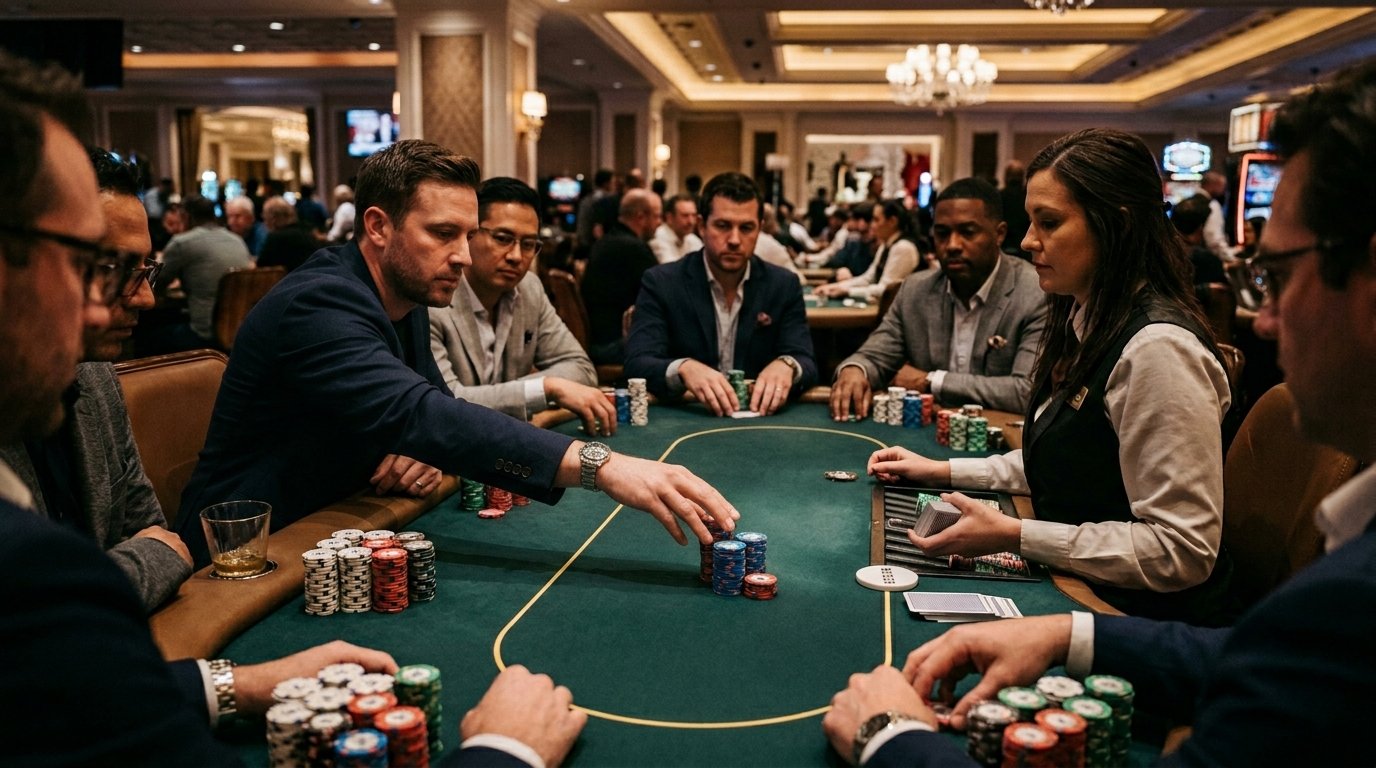
A straddle is a voluntary blind bet placed before cards are dealt, usually by the player sitting under the gun (UTG). It’s typically double the big blind and gives that player the last option to act preflop. Think of it as buying a third blind. It changes the game dynamics significantly — pot sizes grow, decisions get tougher, and the whole table feels the pressure. Whether it helps or hurts you depends entirely on how you use it.
Introduction
Most players think the straddle is just a fun move to juice the pot — but it’s actually one of the most misunderstood decisions at a live poker table. What is a straddle in poker isn’t a simple question, and if you treat it like one, you’ll bleed chips without realising why.
Here’s what you’re going to get from this: why the straddle shifts your bankroll management strategy, what it actually costs you in equity, and the one situation where straddling genuinely makes sense. You’ll also see the mistake that wrecks most recreational players the moment they try it.
The straddle looks aggressive. But most of the time, it’s just expensive.
What Is a Straddle in Poker?
What is a straddle in poker when you strip away all the table talk? It’s a live, voluntary blind that you post before the cards hit the felt. The player in the UTG seat typically puts in double the big blind — so at a £1/£2 table, that’s £4 into the middle before you’ve seen a single card.
Here’s what most articles get completely wrong about this: they frame it as a positional power move. It isn’t. When you straddle UTG, you’re still acting first after the flop. The only “power” you get is the option to raise preflop if it folds or calls around to you — and that edge disappears the second the flop lands. You’ve paid for an illusion of control.
What it actually does is double the effective stakes of the game. Wagering requirements on your stack change. Your bankroll management needs to account for bigger pots and more volatile swings. The house edge doesn’t shift, but the game’s volatility absolutely does.
How a Straddle in Poker Actually Works
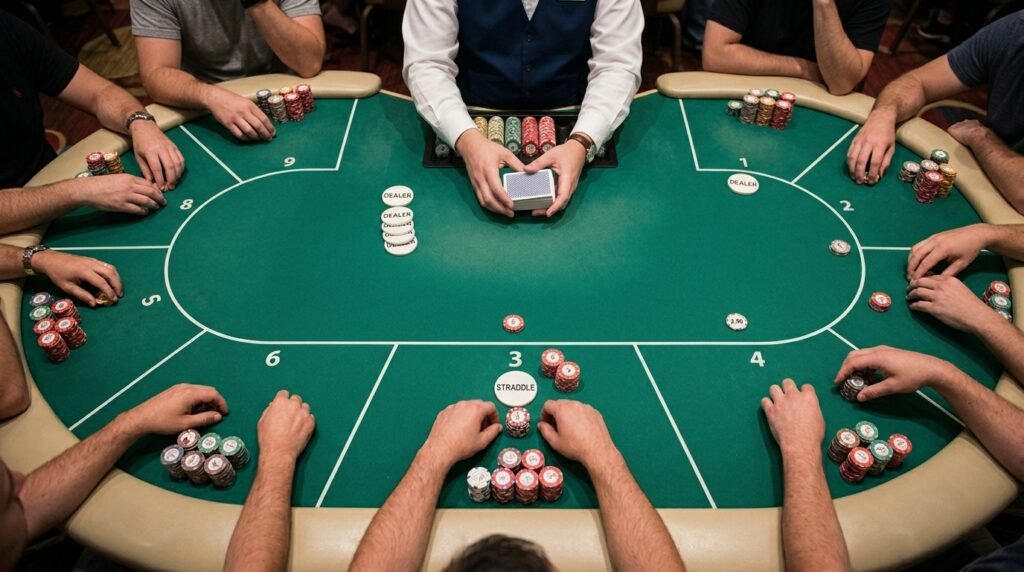
Here’s the step-by-step of what happens when someone puts out a straddle:
- Post the straddle before cards are dealt. The UTG player (or eligible seat, depending on the casino’s rules) places double the big blind into the pot. This is a live bet — not a dead blind. It counts as a raise.
- Cards are dealt as normal. Everyone gets their hole cards. The preflop action now starts to the left of the straddle, not the left of the big blind. The betting round now has three forced contributions instead of two.
- Action comes around. Players can fold, call the straddle amount, or raise. The key difference: the straddle player acts last preflop if no one re-raises. That’s the one real perk.
- The straddle player closes action preflop. If it’s just calls around, the straddler can check (see a free flop), raise, or fold. This is the moment most players overvalue — it sounds powerful, but you’re playing a bigger pot from a weaker position post-flop.
- Post-flop, position reverts. The UTG player is first to act after the flop, turn, and river. That positional disadvantage doesn’t go away.
Here’s something most guides won’t tell you: casinos love it when players straddle regularly, because the pot grows, the spin count effectively increases, and decisions under pressure lead to mistakes. Recreational players treat it like a power play; experienced players treat it as a donation in most spots.
Straddle in Poker Benefits Most Players Completely Miss
Benefit 1: It Reveals Table Dynamics Instantly
When you’re at a new table and someone straddles, pay close attention to how everyone reacts. Do players groan? Do three people immediately call? That tells you whether you’re in a loose, action-heavy game or a tight, calculated one. You can read the entire table’s DNA in that one moment — without spending a single chip yourself.
Benefit 2: It Can Be a Legitimate Squeeze Play Setup
If you’re in late position and someone else straddles, you now have a wider range to 3-bet profitably. The pot is bigger, players behind the straddle tend to call wider, and a well-timed squeeze can win you a large pot without a fight. Most players are too focused on whether they should straddle to notice this opportunity when someone else does.
Benefit 3: It Shifts the Table’s Wager Psychology
A well-timed straddle — particularly at a point in the session where you want to loosen up a passive game — can reset how the whole table plays. Think of it as increasing the game’s volatility on purpose. If you’re card dead and the table is tight and boring, sometimes one straddle breaks the pattern. That’s not reckless; it’s a calculated disruption. Just don’t make it a habit.
Tips That Actually Work
Here are four things worth knowing before you straddle or face one.
Know the Casino’s Straddle Rules First
Not every poker room runs the same straddle rules. Some allow button straddles (which are genuinely powerful since you act last post-flop too). Others only allow UTG straddles. A few cap the straddle amount or restrict how many can go out at once. Confirming the rules before you sit down isn’t paranoia — it’s basic game selection. Getting this wrong mid-hand is embarrassing and costly.
The Button Straddle Is a Completely Different Beast
Nobody talks about this enough: a button straddle is legitimately strong. You post from the best position at the table, you act last preflop and post-flop, and you’ve already put in a live raise. If you’re going to straddle at all, the button is the only seat where the math actually works in your favour. Most players straddle UTG because it feels aggressive. That feeling costs them.
Treat It Like a Buy-In Decision, Not an Impulse
Before you straddle, ask yourself: am I comfortable playing a pot potentially four or five times my normal open size from a disadvantaged position? If your bankroll management isn’t sized for that volatility, you’ll feel it. Straddles compound quickly when the table gets into the rhythm — and if you start one, players often straddle back. Know your financial floor before the first chip goes in.
Watch the Regulars, Not the Fish
The recreational players at the table will straddle randomly, emotionally, or just for fun. The regulars will only do it when it gives them a specific edge — or not at all. If the tightest, most disciplined player at the table never straddles, that tells you something. Model your straddle frequency after the players who consistently leave with more than they brought.
Mistakes to Avoid With a Straddle in Poker
Most mistakes here come from misreading what the straddle actually does to your position and bankroll.
Mistake 1: Straddling UTG Every Hand as a “Style”
What it is: Some players adopt the straddle as a default habit, posting it every orbit regardless of table conditions or stack depth.
Why players make it: It feels like aggression and gets noticed. Psychologically, it signals confidence — even when the decision is negative EV.
How to avoid it: Track your actual results when straddling versus not. The variance will tell the real story. Selective straddling is a tool; constant straddling is a leak.
Mistake 2: Forgetting You Act First Post-Flop
What it is: Players grab the preflop option to close action and forget they’re now stuck acting first on every subsequent street. This destroys the perceived advantage of “acting last preflop.”
Why players make it: The preflop perk feels significant in the moment — the post-flop disadvantage is abstract until it bites you.
How to avoid it: Before straddling, visualise the entire hand, not just the preflop decision point. Ask: am I ready to play a big pot out of position on all three streets?
Mistake 3: Calling a Straddle With a Marginal Hand
What it is: When someone else straddles, many players flat-call with hands they’d normally fold — because the pot looks more appealing.
Why players make it: Bigger pot feels like better value. It isn’t, especially with a weak holding and bad position.
How to avoid it: Apply the same hand selection standards you’d use if the straddle wasn’t there. The bigger pot doesn’t improve your hand — it amplifies your mistake.
FAQs
What exactly is a straddle in poker?
It’s a voluntary live blind bet posted before cards are dealt — typically double the big blind by the UTG player. It counts as a live raise, meaning the straddler gets the option to act last preflop. It effectively raises the stakes of the whole hand before anyone sees their cards.
How does a straddle in poker work step by step?
The UTG player posts double the big blind before the deal. Cards are dealt normally. Preflop action starts left of the straddle. If action reaches the straddler unraised, they can check, raise, or fold. Post-flop, the UTG position disadvantage applies as usual — first to act on every street.
Is a straddle in poker actually worth it for players?
Honestly, not usually — at least not from UTG. The preflop option you gain doesn’t offset the post-flop positional disadvantage across a full session. A button straddle is more defensible. If you’re playing in a loose game and want to build bigger pots with your strong hands, it can work. For tight, disciplined games, it mostly just inflates variance.
What are the biggest mistakes to avoid with a straddle in poker?
Straddling every hand out of habit is the biggest one — it turns a situational tool into a consistent chip leak. Close behind it is calling a straddle with marginal hands just because the pot looks juicy. The straddle changes the bet size, not your hand strength.
What’s the single best tip for getting the most from a straddle in poker?
Only straddle from the button when the option’s available. You keep the post-flop position advantage, you get the preflop closing action, and you’re playing the biggest pot from the best seat. That’s the only version where the math holds up — everything else is mostly theatre.
Final Thoughts
The straddle is one of those moves that looks bold from the outside and feels powerful when you do it — but the numbers behind it are almost always working against you from a UTG seat. Understanding what is a straddle in poker properly means knowing it’s not an aggressive play; it’s a positional sacrifice dressed up as one. The button straddle is the exception, not the rule, and even then it depends on the game and your stack depth. If you’re going to use it at all, be intentional about when, why, and what you’re trying to accomplish — because doing it out of habit is just a slow way to hand your stack to the table.
The players who make the straddle work don’t do it to look like action heroes. They do it once, when the table’s asleep and they hold position. That’s the whole game.