





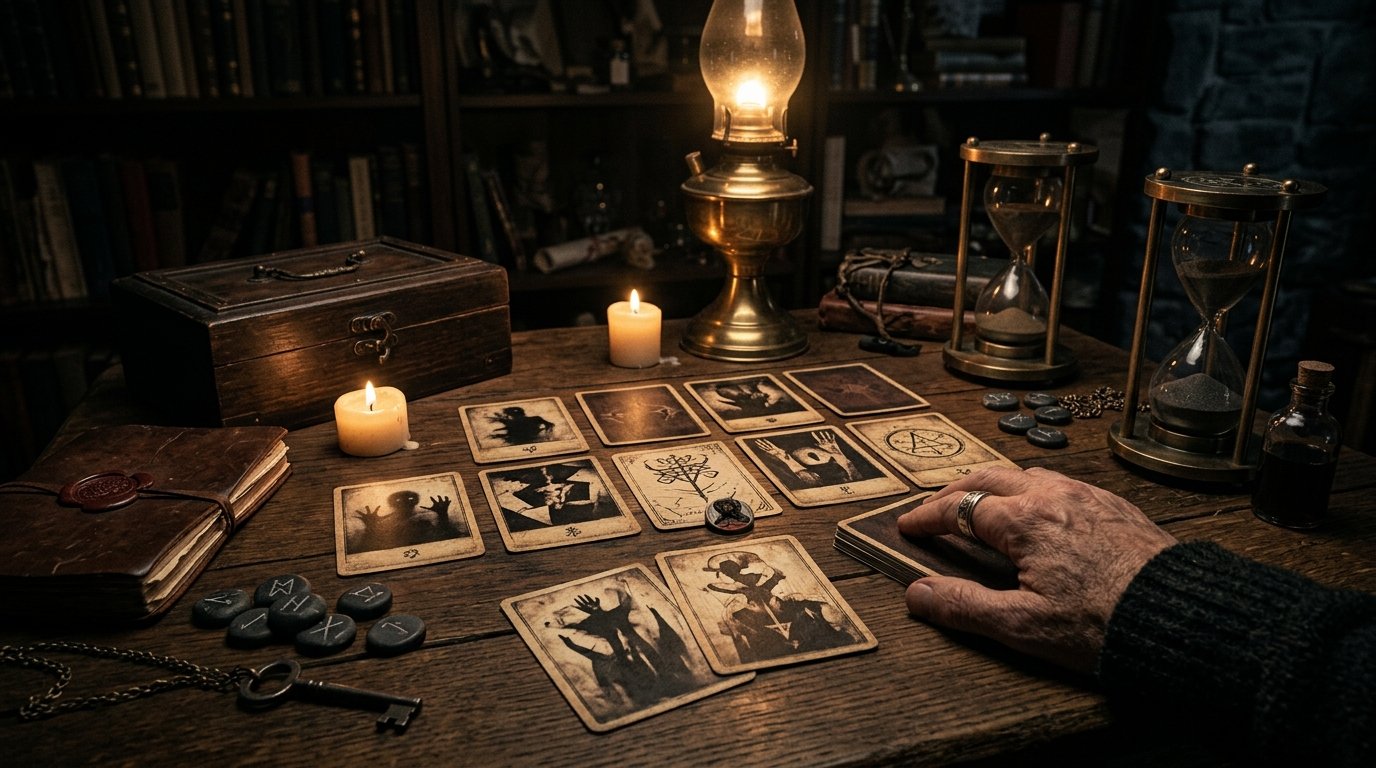
Quick Answer: The buckshot roulette card game is a psychological turn-based game where players use cards to simulate a shotgun loaded with unknown “live” and “blank” rounds. Players take turns deciding whether to shoot themselves or their opponent, using item cards to gain information or an edge, with the goal of being the last player standing.
Introduction
A shotgun with two shells, a table between two players, and a decision that has to be made blind — that’s the tension the buckshot roulette card game recreates using nothing but cards instead of digital dice rolls. If you’ve played the original video game version and wondered how it translates to a physical or card-based format, or you’re hearing about this format for the first time, you’re in the right place. This guide walks you through what the game actually is, how the rules work step-by-step, the terminology you’ll hear at the table, and the mistakes that trip up almost every new player. By the end, you’ll understand the mechanics well enough to explain them to someone else.
What Is the Buckshot Roulette Card Game?
The buckshot roulette card game is a tabletop adaptation of the horror-tinged indie video game Buckshot Roulette, which itself borrows its central idea from Russian roulette. Instead of a physical firearm, players use a shuffled deck representing shotgun shells — some “live,” some “blank” — combined with item cards that let them peek, skip turns, or manipulate outcomes.
Beginners tend to struggle with this game for a specific reason: it’s a game of incomplete information, and that’s uncomfortable if you’re used to games where you can calculate a clear best move. You don’t know exactly how many live rounds remain versus blanks at any given moment unless you’ve been tracking carefully or used an item to check. The tension isn’t really about luck — it’s about how well you handle uncertainty and read your opponent’s behavior when they know something you don’t.
How the Rules Work: Step-by-Step
Here’s the basic structure most card adaptations follow. Specific fan-made versions vary slightly, but the core loop stays consistent:
- Shuffle the shell deck. A set number of cards represent shells — a mix of “live” and “blank” — and get shuffled face-down into a stack.
- Deal item cards. Each player receives a hand of item cards (these simulate the tools from the original game, like a magnifying glass, handcuffs, or a beer can).
- Reveal the shell count. Both players are told how many live and blank shells are in the current round, but not their order.
- Take turns choosing a target. On your turn, you decide whether to “fire” at yourself or at your opponent.
- Draw the top shell card. If it’s live, the targeted player takes a hit (loses a life point or token). If it’s blank, nothing happens — but importantly, the turn structure changes depending on who was targeted.
- Use item cards strategically. Before firing, players can play item cards to change the odds, see the next shell, skip a turn, or force a re-shuffle.
- Continue until the deck is empty or a player is eliminated. Once all shells are drawn, remaining live/blank shells are reshuffled and the round count is announced again.
- Repeat until only one player has life points remaining.
That’s the skeleton. The nuance comes from when and how item cards get used, which is where most of the actual skill sits.
The Mechanics Behind the Tension
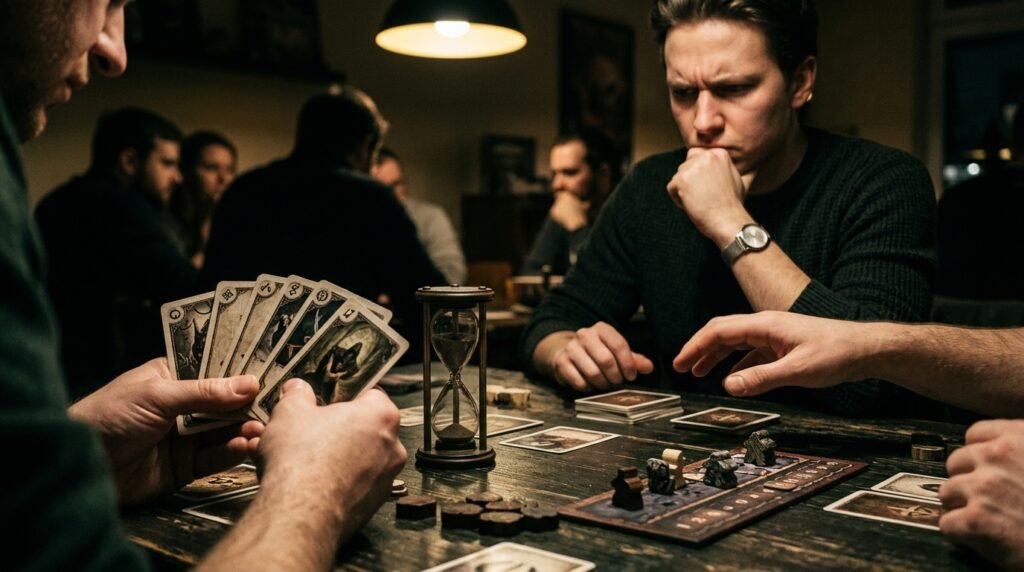
What makes this game compelling isn’t really the coin-flip of live versus blank — it’s the decision tree layered on top of it. Every time a blank shell is drawn against yourself, most versions let you take another turn immediately. This creates a real incentive to shoot yourself when you have decent odds, because a correct guess earns you a free extra action.
This single mechanic changes how you think about the whole game. It’s not simply “shoot the opponent when possible.” Skilled players constantly recalculate probability as shells are drawn, since each revealed card changes the remaining ratio of live to blank shells in the deck. If two blanks come out early, the odds that the next card is live go up substantially, and that should directly affect your decision.
Item cards add another mechanical layer. A card that lets you peek at the next shell removes guesswork entirely for one turn. A card that forces your opponent to discard changes their available options. Learning to read when an opponent uses an item — not just what it does — often tells you more than the card text itself.
Common Beginner Mistakes to Avoid
New players tend to make the same handful of errors:
- Ignoring the running probability. Forgetting how many live and blank shells have already been drawn is the single biggest mistake. The odds shift every single turn.
- Overusing item cards too early. Item cards are often more valuable held in reserve for a critical moment than played reflexively the turn you draw them.
- Shooting yourself without calculating odds first. The free-turn mechanic only pays off when the math favors you — treating it as a default move is a losing habit.
- Telegraphing decisions through hesitation. Since this is partly a psychological game, pausing too long before certain moves can tip off an attentive opponent.
- Miscounting the deck after a reshuffle. When shells run out and get reshuffled, some players forget the ratio resets, and they keep using outdated odds from the previous round.
Pro Tip: Keep a mental tally (or a scratch note, if playing casually) of live versus blank shells drawn each round. It sounds tedious at first, but it becomes automatic within a few rounds and dramatically improves your decision-making.
Key Terms and Terminology Explained
If you’re new to this game’s vocabulary, here’s a quick breakdown of what you’ll hear at the table:
- Live shell — The card representing a shot that causes damage if fired.
- Blank shell — The card representing an empty shot; no damage occurs.
- Item card — A support card that grants a special action, such as checking a shell or skipping a turn.
- Free turn — An extra action granted (in most versions) when a player shoots themselves and draws a blank.
- Reshuffle — The point at which all shell cards have been drawn and a new mix of live/blank cards is shuffled back into play.
- Life tokens — Tracked points representing how many hits a player can survive before elimination.
Strategy Tips for Understanding the Game Better
This isn’t about “winning real money” — it’s about sharpening how you read probability and behavior in a turn-based system. A few habits genuinely help:
- Track the deck like a card counter would. Even a rough mental estimate of remaining live shells beats guessing blindly.
- Save at least one information-based item card for late rounds. Odds swing hardest when few shells remain, so information is most valuable then.
- Watch opponent timing, not just their moves. Quick, confident plays often signal certainty; hesitation often signals a genuine 50/50 guess.
- Don’t assume symmetry. Just because you’d make a certain play doesn’t mean your opponent will — factor in how risk-averse or aggressive they’ve been so far.
Myths vs. Facts
| Myth | Fact |
|---|---|
| “It’s pure luck, skill doesn’t matter.” | Probability tracking and item-card timing meaningfully shift outcomes over multiple rounds. |
| “You should always shoot yourself first.” | Only correct when the live-to-blank ratio favors a blank draw — otherwise it’s a bad habit. |
| “Item cards should be used the moment you draw them.” | Holding items for high-pressure moments is usually stronger than using them immediately. |
| “The deck odds reset every single turn.” | Odds only reset after a full reshuffle, not after each individual draw. |
| “Bluffing has no place in a probability game.” | Reading and misleading opponents is a core part of high-level play, not a side note. |
According to [External Link Suggestion: a reputable tabletop/card game rules authority such as BoardGameGeek], probability-based bluffing mechanics like this are common across a wider family of “hidden information” games, which share many of the same strategic principles.
Comparison Table: Common Card-Based Variations
| Variation | Shell Count | Item Cards Allowed | Free Turn on Self-Blank | Best For |
|---|---|---|---|---|
| Classic 2-shell round | 2 (mixed live/blank) | 2-3 per round | Yes | Quick casual games |
| Extended deck | 6-8 shells | 4-5 per round | Yes | Longer, strategic sessions |
| No-item variant | Varies | None | Yes | Pure probability practice |
| Team format | Varies | Shared pool | Depends on house rule | Group/party play |
Conclusion
The buckshot roulette card game rewards patience over impulsiveness. Three things matter most: tracking the live-to-blank ratio as shells get drawn, using item cards at the right moment rather than the first chance you get, and reading your opponent’s behavior as closely as the cards themselves. None of it requires luck alone — it requires attention.
So next time you sit down to play, ask yourself: are you making decisions based on the actual odds left in the deck, or just going with your gut? If you want to go deeper, a guide on probability fundamentals in card games is a natural next read. Master the count, and the tension stops feeling random — it starts feeling like a puzzle you can actually solve.
FAQs
What is the buckshot roulette card game based on?
It’s based on the indie horror video game Buckshot Roulette, which itself draws inspiration from Russian roulette. The card version translates the shotgun-and-shells mechanic into a shuffled deck system, letting players simulate the same tense, turn-based decision-making without needing any physical props beyond cards.
Is the buckshot roulette card game only for two players?
Most versions are designed for two players, since the core tension relies on a direct back-and-forth. Some fan-made variants adapt it for small groups by rotating turns or splitting into teams, but the classic experience is built around one-on-one psychological pressure and probability reading.
How do you calculate odds in the buckshot roulette card game?
You track how many live and blank shells remain in the current round. To estimate:
- Note the total shells announced at the start of the round.
- Subtract each shell as it’s drawn and revealed.
- Recalculate the live-to-blank ratio after every draw to guide your next decision.
What do item cards do in the buckshot roulette card game?
Item cards grant special one-time actions, such as revealing the next shell, skipping an opponent’s turn, or forcing a reshuffle. They don’t change the actual live/blank ratio directly but give players tools to gather information or disrupt an opponent’s plan at a critical moment.
Why do players sometimes shoot themselves in the buckshot roulette card game?
In most rule sets, drawing a blank while targeting yourself grants an extra turn. This makes self-targeting a calculated risk rather than a random choice — it’s only a good move when the probability of drawing a blank is reasonably high based on what’s already been revealed.
Can the buckshot roulette card game be played casually without strict rules?
Yes. Many groups simplify the item-card set or adjust shell counts for a faster, more casual session. The core probability-and-bluffing loop still works even with a stripped-down rule set, making it flexible for both quick games and longer, more strategic sessions.