




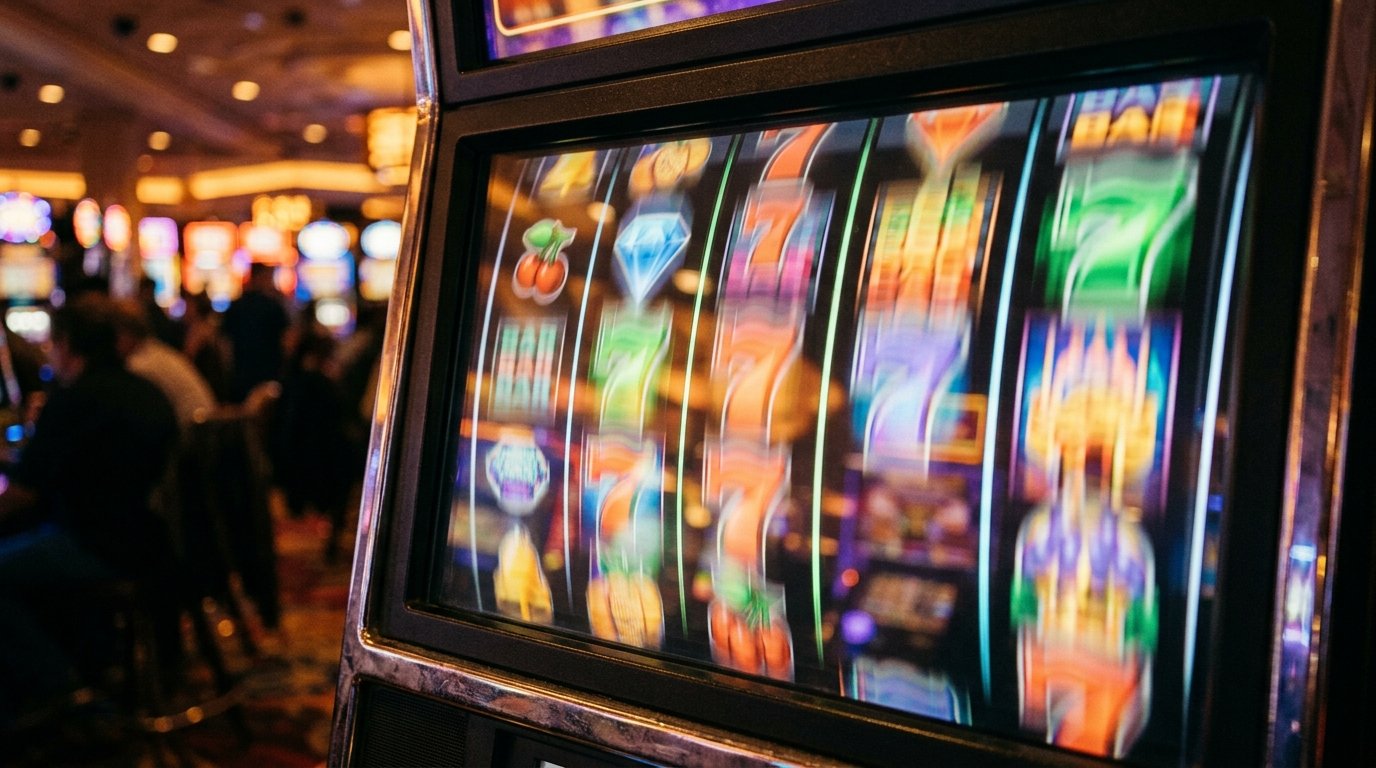
Quick Answer: Slot machines aren’t “rigged” in the sense of being manually controlled to make you lose. They run on a certified random number generator (RNG) and a fixed return-to-player (RTP) rate, both set before the machine ever hits the floor. Outcomes are random, but the math always favors the house over time.
Introduction
Ever pulled the lever, watched the reels stop just one symbol short of a jackpot, and thought, “this thing is definitely rigged”? You’re not alone. Whether slot machines are rigged is one of the most searched questions among new players, and the honest answer is more interesting than a simple yes or no. In this guide, you’ll learn how slot machines are actually built, what regulators require before a machine can legally operate, why near-misses feel so personal, and how to read the odds like someone who actually understands the mechanics behind the flashing lights.
What Does “Rigged” Actually Mean — and Why Beginners Struggle With It
When people ask if a slot machine is rigged, they usually mean one of two very different things: either “does the casino manually control who wins and loses in real time,” or “is the game mathematically designed so I lose more than I win.” These are not the same question, and mixing them up is where most confusion starts.
The first idea — a casino employee flipping a switch to make your specific spin lose — is not how legal, regulated machines work. The second idea — that the game is built with a house edge baked in — is completely true, and it’s true by design, not by manipulation.
Beginners struggle here because slot machines are intentionally built to feel like games of skill and momentum (streaks, “hot” machines, near-misses), when they’re actually independent random events every single time. That emotional mismatch between how the game feels and how it actually works is the real source of the “rigged” feeling.
How Slot Machines Actually Work (Step-by-Step)
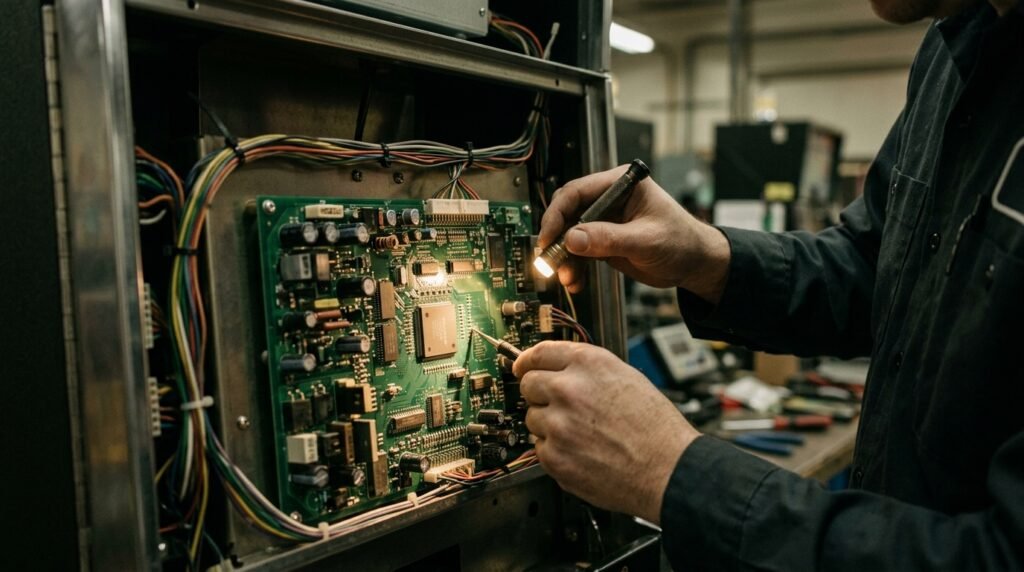
Here’s the basic sequence behind every spin on a modern slot machine:
- You press spin. This sends a signal to the machine’s internal computer, not to a physical reel that “decides” anything on its own.
- The RNG generates a number. A random number generator produces thousands of numbers per second, even when no one is playing.
- That number maps to a result. The number generated at the exact moment you press spin corresponds to a specific combination of symbols on a virtual reel.
- The physical reels display the result. The spinning reels you see are animation — a visual representation of a result that was already determined instantly.
- The machine pays according to the paytable. If your result matches a winning combination, the fixed paytable determines the payout.
Pro Tip: The RNG runs continuously, even between spins. That’s why timing your spin “just right” has zero effect on the outcome — the number was already generated before your brain finished the thought.
The Mechanics Behind Every Spin: RNG, RTP, and Volatility
Three concepts explain almost everything about how slots behave:
- RNG (Random Number Generator): The software that determines outcomes. Independently tested labs certify that RNGs produce statistically random, unpredictable results.
- RTP (Return to Player): A percentage showing how much of all wagered money a machine is programmed to return over millions of spins. An RTP of 96% means that, over a very long run, the machine returns $96 for every $100 wagered — as an average across all players, not a promise to any individual.
- Volatility (or variance): How a machine distributes its payouts. Low-volatility machines pay smaller amounts more often; high-volatility machines pay rarely but can pay much larger amounts when they do.
Understanding these three terms is the single biggest shift between “this feels rigged” and “I understand why this happened.”
Common Beginner Mistakes When Judging a Slot Machine
- Assuming a losing streak means the machine is “due” for a win. Each spin is independent; the machine has no memory of previous spins.
- Believing a near-miss (two matching symbols plus one close symbol) means you were “almost” there. Near-misses are programmed into the visual design and carry no extra odds significance.
- Thinking a machine that hasn’t paid in a while will “loosen up.” RTP is measured over millions of spins, not tied to any single session or day.
- Confusing volatility with being rigged. A high-volatility machine that hasn’t paid in 200 spins is behaving exactly as designed, not maliciously.
Terminology You Need to Understand This Topic
- RNG: The certified algorithm generating outcomes.
- RTP: The theoretical long-term payout percentage of a machine.
- Hit frequency: How often a spin results in any payout, regardless of size.
- Paytable: The chart showing what each symbol combination pays.
- House edge: The mathematical advantage built into the game’s design, expressed as the inverse of RTP.
- Jurisdiction/regulator: The government or independent body responsible for testing and licensing gaming equipment.
How to Read the Odds Like Someone Who Understands the Math
Rather than looking for patterns in symbols, focus on what’s actually knowable about a machine:
- Check the RTP listed in the machine’s help screen or the game’s information menu — this is public information on most modern machines.
- Note the volatility level, if listed, since it changes what a “normal” losing or winning stretch looks like.
- Remember that RTP describes millions of spins, not your next ten. Short-term results can swing far from the long-term average in either direction.
- Understand that no amount of timing, rhythm, or button-pressing style changes the outcome, since the RNG has already generated the result before the reels animate.
Pro Tip: Reading the RTP and volatility before you understand a machine’s behavior is like reading a weather forecast — it tells you the odds, not the guaranteed outcome of any single day.
Myths vs. Facts About Slot Machines
Myth: A casino employee can remotely make a specific machine stop paying.
Fact: In regulated markets, RNGs are certified by independent testing labs, and outcomes can’t be manually adjusted spin-by-spin.
Myth: Machines near the entrance are looser to attract players.
Fact: Placement is a marketing decision unrelated to a machine’s programmed RTP.
Myth: A machine that just paid a jackpot won’t pay again soon.
Fact: Every spin is independent; a jackpot has no bearing on the next spin’s odds.
Myth: Online slots are less regulated than physical ones, so they’re more likely to be rigged.
Fact: Licensed online slots typically use the same certified RNG technology as physical machines, tested by the same category of independent labs.
Comparison Table: Volatility Types at a Glance
| Volatility Level | Payout Frequency | Typical Payout Size | Best Understood As |
|---|---|---|---|
| Low | Frequent | Small | Steady, gradual results |
| Medium | Moderate | Moderate | Balanced pattern |
| High | Rare | Large | Long droughts, occasional big hits |
Conclusion
So, are slot machines rigged? Not in the way most people imagine. The three things worth remembering: outcomes come from a certified RNG rather than manual control, RTP is a long-term mathematical average rather than a session-by-session guarantee, and near-misses or “due” machines are perception, not mechanics. Once you understand RNG, RTP, and volatility, the flashing lights start making a lot more sense.
What part of slot mechanics surprised you most — the RNG timing, or how RTP actually works? If you’re curious, RTP and volatility go hand in hand, and understanding the second term will round out the picture.
Random doesn’t mean unfair — it just means nobody, including the machine, knows what’s coming next.
FAQs
Are slot machines rigged to make you lose?
No, not in the sense of manual control over individual spins. Regulated slot machines run on certified random number generators tested by independent labs. The game does have a built-in house edge, but that’s a mathematical design choice, not manipulation of specific spins.
How do I know if a slot machine is fair?
Look for machines from licensed manufacturers operating in regulated jurisdictions. These require RNG certification from independent testing labs. Fairness comes down to three things: 1) certified RNG software, 2) published RTP, and 3) oversight from a licensing authority.
Can a casino change the payout percentage of a slot machine?
In regulated markets, RTP changes typically require regulatory approval and aren’t adjusted instantly or remotely. This process exists specifically to prevent the kind of manipulation people worry about when they ask if slot machines are rigged.
Why do slot machines feel rigged after a losing streak?
This usually comes down to volatility, not rigging. High-volatility machines are designed to pay less often, so a losing streak can feel personal even though it’s statistically normal for that machine’s design.
Is RTP the same as your chances of winning?
Not exactly. RTP is a long-term average across millions of spins, not a prediction for any single session. Two players can have very different short-term results on the same machine despite an identical RTP.
Are online slot machines more likely to be rigged than physical ones?
Not if they’re licensed. Licensed online slots generally use the same category of certified RNG technology as physical machines, reviewed by independent testing organizations before going live.