





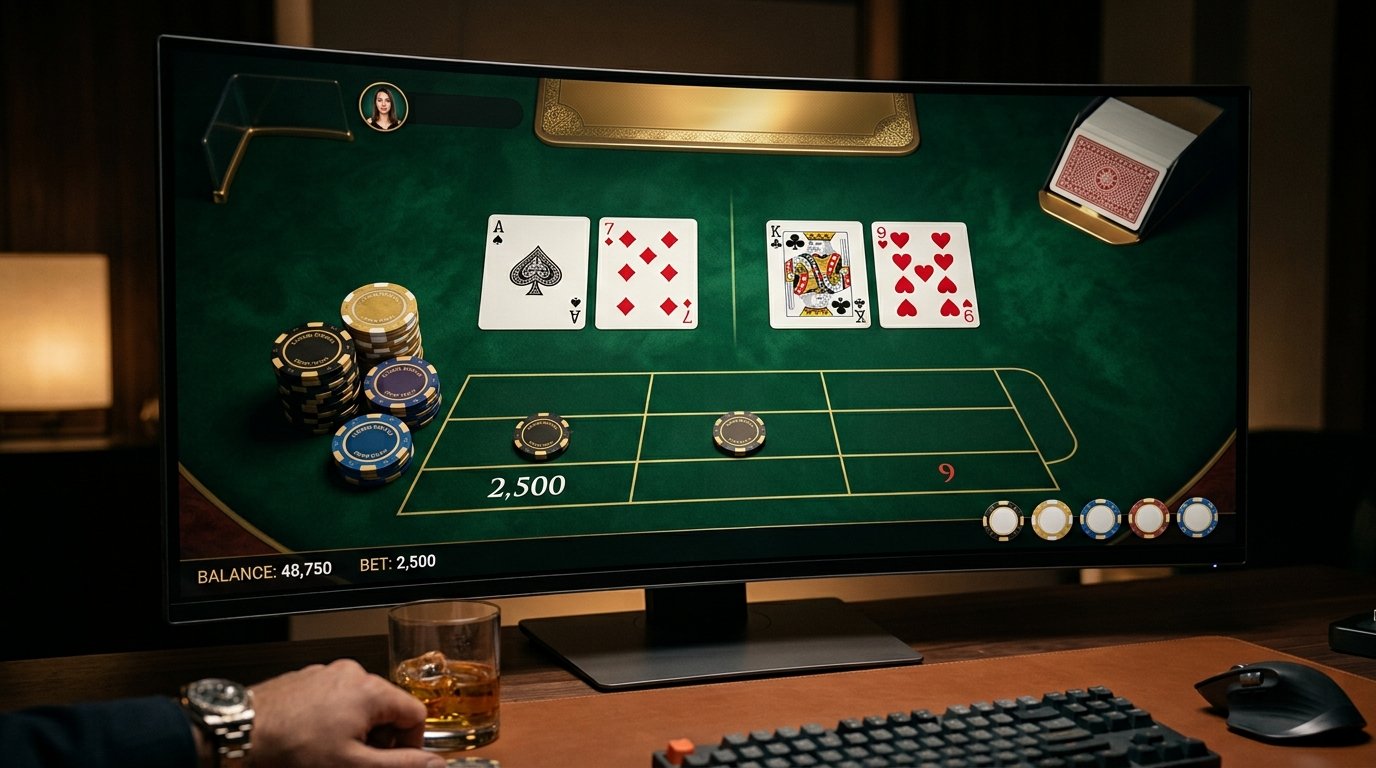
Quick Answer: The best online baccarat sites aren’t defined by bonuses — they’re defined by clear rules, transparent odds, and fair shuffling systems. Understanding how baccarat actually works (the draw rules, the house edge, the bet types) is the fastest way to judge any platform’s quality for yourself.
Baccarat has one of the lowest house edges of any casino card game, yet most beginners can’t explain why the Banker bet almost always wins slightly more often than the Player bet. That single fact — buried in a 500-year-old French card game — is the difference between guessing your way through a table and actually understanding what you’re looking at.
If you’ve searched for the best online baccarat sites, you’ve probably noticed that most results talk about welcome offers and app design. Almost none explain the game itself. This guide flips that around. By the end, you’ll know exactly how baccarat works, which terms actually matter, and what separates a well-run baccarat table from a sloppy one — knowledge that’s far more useful than any list of logos.
What Is Baccarat, and Why Do Beginners Struggle With It?
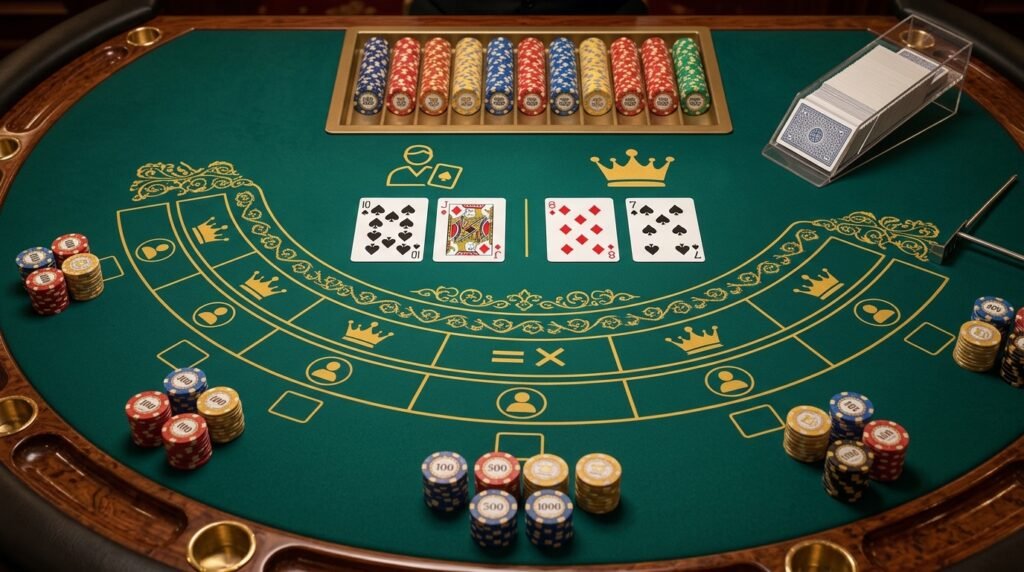
Baccarat is a comparing card game played between two hands — the Player and the Banker — where the goal is simple: predict which hand will total closer to 9. Despite that simplicity, new players often freeze up at the table, and it’s usually for one of three reasons.
First, the drawing rules (the “third card rule”) look complicated on paper, even though they’re fully automatic. Second, the terminology — Banker, Player, Tie, Natural, Commission — sounds unfamiliar even to people who’ve played other card games. Third, baccarat tables move fast, and beginners feel pressure to keep up without understanding what’s happening.
Here’s the reassurance: you never have to calculate anything yourself. The dealer (or the software, in an online game) applies the drawing rules automatically. Your only real decision is which of three bets to place before the cards come out. Everything else is spectator math.
How Baccarat Actually Works: The Rules, Step by Step
Baccarat plays out in a fixed sequence every single hand. Once you’ve seen it laid out plainly, the “complexity” disappears.
- Place your bet on Player, Banker, or Tie before any cards are dealt.
- Two cards are dealt to both the Player hand and the Banker hand.
- Card values are totaled. Aces count as 1, cards 2–9 count at face value, and 10s and face cards count as 0.
- Only the last digit counts. A hand of 7 + 8 = 15 counts as 5, not 15.
- A “Natural” ends the hand instantly. If either hand totals 8 or 9 from the first two cards, no more cards are drawn, and that hand wins (unless both tie).
- The Player hand draws first, following a fixed rule: draw a third card on totals of 0–5, stand on 6 or 7.
- The Banker hand draws next, based on its own total and the Player’s third card (this is where the official “third card rule” table applies).
- Totals are compared, and the hand closest to 9 wins the round.
Notice what’s missing from that list: any decision-making after your initial bet. That’s the core mechanic beginners misunderstand — baccarat isn’t a skill game in the way blackjack or poker are. It’s a prediction game with fixed, mechanical outcomes.
The Mechanics Behind the Numbers: Why the Banker Bet Wins More Often
This is the part most beginners never get explained clearly. Because the Banker hand draws after seeing the Player’s third card, it has a built-in mathematical advantage — it can adjust based on information the Player hand never had.
That’s why, over thousands of hands, the Banker bet wins slightly more often than the Player bet. It’s also why online baccarat sites charge a small commission (typically 5%) on winning Banker bets — it’s the house’s way of neutralizing that natural edge so the game stays balanced.
Pro Tip: When comparing platforms, check exactly how commission is calculated and displayed. Clear, itemized commission tracking is one of the simplest signs of a well-run baccarat table — vague or bundled fees are a red flag.
The Tie bet, meanwhile, pays much higher (often 8:1 or 9:1) precisely because it happens far less frequently — roughly 9-10% of hands. Understanding this payout-to-probability relationship is the single most useful piece of baccarat math for a beginner.
Common Beginner Mistakes to Avoid
Even players who understand the rules on paper tend to trip over the same handful of mistakes early on.
- Betting on Tie regularly. The payout looks tempting, but the probability is low enough that it carries one of the worst long-term value ratios at the table.
- Assuming past results predict future hands. Baccarat outcomes are independent — a run of Banker wins doesn’t make Player “due” next.
- Ignoring commission math. A Banker win that pays out without accounting for the 5% commission looks better on a screen than it actually is.
- Not checking a site’s shuffle and RNG disclosure. Reputable platforms explain whether they use live shuffling, continuous shuffling machines, or certified random number generators for digital tables.
- Confusing baccarat scoreboards (“road maps”) with strategy. Those bead-plate and big-road displays track history — they don’t predict anything.
Key Baccarat Terms Explained
Walking into a baccarat table without knowing the vocabulary is like reading a recipe in a language you half-understand. Here’s the terminology that actually matters:
- Natural – A first-hand total of 8 or 9, which ends the round immediately.
- Commission – The small fee (usually 5%) taken from winning Banker bets.
- Punto Banco – The most common baccarat variant, where all drawing decisions are automatic (no player choice in card draws).
- Chemin de Fer – A traditional variant where players take turns being the Banker.
- Road maps / Bead plate – Visual trackers of previous outcomes, used for reference, not prediction.
- Coup – A single round or hand of baccarat.
Strategy Concepts That Actually Help You Understand the Game
“Strategy” in baccarat isn’t about beating the math — the house edge is fixed regardless of betting pattern. But there are concepts that genuinely help you understand the game better, rather than just guessing.
Understanding edge-per-bet is the most useful concept: the Banker bet typically carries a house edge around 1.06%, the Player bet around 1.24%, and the Tie bet often exceeds 14%. Knowing these numbers changes how you interpret any table, on any platform.
Pro Tip: Some online baccarat sites display real-time odds or edge percentages directly in the game interface. That transparency is a genuinely useful signal of platform quality — it means the operator isn’t hiding the math from you.
Bankroll awareness and pacing (deciding in advance how many rounds you’ll observe or track before drawing conclusions) is a far more realistic “strategy” than any betting progression system, since no sequencing of bets changes the underlying probabilities.
Myths vs. Facts About Baccarat
| Myth | Fact |
|---|---|
| Baccarat is a game of skill like poker | It’s a game of prediction — all draws are automatic and rule-based |
| Betting systems (like Martingale) beat the house edge | No betting pattern changes the fixed mathematical odds of each hand |
| The Tie bet is a “hidden gem” for value | It has one of the highest house edges of the three bets |
| Road maps predict future outcomes | They only record history; each hand is statistically independent |
| Banker and Player have identical odds | Banker has a slightly lower house edge due to drawing rules and commission |
What Separates a Well-Run Baccarat Platform From a Sloppy One
Once you understand the mechanics above, evaluating any baccarat platform gets much easier — you’re checking their explanation against what you now know is true.
Look for: clear, itemized commission tracking on Banker wins; a visible or linked explanation of the third-card drawing rules; disclosed shuffle methodology or RNG certification for digital tables; accurate house-edge figures that roughly match the numbers in this guide; and terminology used correctly and consistently across the site.
According to gaming regulators such as the UK Gambling Commission, licensed operators are required to publish game rules and return-to-player information in a way that’s accessible to players before they participate.
Conclusion
Baccarat looks intimidating because of its French terminology and fast pacing, but the mechanics underneath are some of the simplest at any casino table: two hands, fixed drawing rules, and a total that comes down to a single digit. The three things worth remembering are the automatic third-card rule, the commission structure behind the Banker’s edge, and the fact that no scoreboard or betting pattern changes the underlying probabilities.
Next time you look at any baccarat table — in person or online — you’ll be reading it instead of just watching it. What part of the drawing rules did you find most surprising: the automatic third card, or the commission on Banker wins?
If you’re curious how this compares to other table games, our guide on house edge across casino games is a natural next read.
Understanding the game is the real edge — everything else is just decoration.
FAQs
What are the best online baccarat sites known for?
The best online baccarat sites are generally known for transparent rules, clearly disclosed commission structures, and verifiable fairness standards for their card shuffling or random number generation. Rather than judging a platform by its design or bonuses, look at how clearly it explains its odds, its house edge figures, and its drawing rules — that transparency is a stronger quality signal than presentation alone.
Is baccarat a game of skill or luck?
Baccarat is almost entirely a game of chance. Unlike blackjack, where players make active decisions about hitting or standing, baccarat’s drawing rules are fully automatic. Your only decision happens before the cards are dealt: choosing Player, Banker, or Tie. After that, the outcome unfolds mechanically based on fixed rules.
Why does the Banker bet have better odds than the Player bet?
The Banker hand draws its third card after seeing the Player’s third card, giving it more information to work with. This creates a slightly stronger statistical position, which is why: 1) the Banker bet wins marginally more often, 2) casinos charge a 5% commission on Banker wins to offset that edge, and 3) the Player bet remains commission-free to balance things out.
What does “Natural” mean in baccarat?
A “Natural” is when either the Player or Banker hand totals 8 or 9 using just the first two cards dealt. When this happens, the round ends immediately — no third card is drawn for either hand. A Natural 9 beats a Natural 8, and if both hands have the same Natural total, the round is a tie.
Do baccarat road maps or scoreboards help predict outcomes?
No. Road maps, bead plates, and big-road displays only show a visual history of past results — they don’t influence or predict future hands. Each round in baccarat is statistically independent, meaning previous outcomes have no bearing on what comes next, regardless of how convincing a pattern might look.
What’s the difference between Punto Banco and other baccarat variations?
Punto Banco is the most widely played baccarat variant, especially online, because all drawing decisions are automatic with no player input. Other variations, like Chemin de Fer, involve players taking turns acting as the Banker and making some active decisions, which makes those versions closer to a social, skill-influenced game rather than a purely mechanical one.