






You’re standing at the ATM inside a casino at 11 p.m., debating whether to pull out another $100. If you’ve ever been in that exact spot, this article is for you — because that moment usually means something already went wrong with your planning, not your luck.
Bringing the “right” amount of money to a casino isn’t about some magic number that guarantees a good time. It’s about matching your cash to the games you’re playing, the length of your trip, and — honestly — your own tolerance for losing. I’ve watched friends walk into Bellagio with $2,000 and blow through it in forty minutes at a $50 blackjack table, and I’ve seen people turn $60 into a six-hour session of genuine fun on penny slots. The dollar amount matters less than how it’s structured.
In this guide, I’ll walk you through exactly how to figure out your casino budget based on real scenarios — a night out in Vegas, a quick trip to a local tribal casino, a weekend at a place like Foxwoods or MGM National Harbor — plus the math casinos don’t really want you doing in your head while you’re at the table.
Why “How Much Should I Bring to a Casino” Doesn’t Have One Answer
Ask ten gamblers this question and you’ll get ten different answers, and honestly, most of them are guessing. The real answer depends on three things: what games you’re playing, how long you’re staying, and what “having fun” actually costs you per hour.
Slots burn through cash fast — a $0.25 spin at max bet on a modern Aristocrat or IGT machine can eat $3-5 per spin, and you might get through 500-600 spins an hour if you’re not careful. Table games move slower per hand but the bets are bigger. A $15 blackjack table with basic strategy has a house edge of around 0.5%, but variance means you could still lose your whole session even playing “correctly.”
That’s the part people skip. Even a game with great odds can wipe you out in the short term. Budgeting isn’t about beating the math — it’s about surviving the swings long enough to actually enjoy yourself.
The Simple Formula I Actually Use
Forget percentage-of-income rules you see on generic finance blogs. Here’s what works in practice:
Session bankroll = (hours you plan to play) × (your target hourly loss rate)
Your hourly loss rate depends on the game and your bet size. As a rough guide based on typical Vegas Strip and regional casino conditions:
- Slots, $0.50-$1 average bet: budget $60-$120 per hour
- Low-limit blackjack ($10-$15 tables): budget $40-$80 per hour
- Roulette (single-zero preferred, $5-$10 bets): budget $50-$100 per hour
- Video poker (9/6 Jacks or Better, full-pay): budget $30-$60 per hour if you know basic strategy
- Craps (pass line + odds only): budget $30-$70 per hour
So if you’re planning a 4-hour Friday night at low-stakes blackjack, you’re looking at roughly $160-$320 as a realistic session bankroll — not the $50 people casually toss in their pocket thinking it’ll last all night.
Breaking It Down by Trip Type
A Casual Night Out (3-4 Hours)
For most people hitting up a local casino — think Choctaw in Oklahoma, Parx in Pennsylvania, or a riverboat in Louisiana — $150-$300 is the sweet spot if you’re playing slots and low-limit tables. This gives you enough cushion to survive a cold streak without needing to hit an ATM, which, by the way, most casinos charge $3-5 per withdrawal for.
A Vegas Weekend Trip
This is where budgets get more complicated because you’re not just gambling — you’re covering meals, drinks, maybe a show. I generally tell people to separate their “entertainment gambling budget” from trip expenses entirely. For a 3-day Vegas trip with moderate play (2-3 hours per day), $500-$1,000 total gambling budget is realistic for someone playing $10-$25 tables or $1 slots. High rollers obviously blow past this, but this range covers most tourists who want a genuinely fun trip without financial regret on the flight home.
A Serious Poker Session
If you’re playing cash game poker — say $1/$2 No Limit at a place like Commerce Casino or The Lodge Card Club in Texas — the standard advice is to buy in with 100 big blinds and have at least 5 buy-ins available as your total bankroll. That’s $200 per buy-in, so roughly $1,000 set aside if you’re playing seriously and want to weather variance without going broke after two bad beats.
A Bachelor/Bachelorette Party or Group Trip
Group trips are dangerous for budgets because peer pressure is real. If your buddy just won $800 on a slot machine next to you, it’s tempting to match his energy. Set your number before you leave the hotel room, and honestly, tell a friend what it is so someone can gently remind you when you’re three whiskeys deep and reaching for your wallet again.
The Envelope Method (Still Works in 2026)
I know it sounds old-fashioned, but pulling your gambling cash out in advance and leaving your cards in the hotel safe is still one of the most effective bankroll tools out there. When I tested this approach across a handful of Vegas trips, the difference was stark — cash-only sessions ended an average of 40 minutes earlier than sessions where I kept a card on me “just in case.” Running out of physical cash creates a natural stopping point that a credit card simply doesn’t.
Split your total budget into daily or per-session envelopes. If you’re bringing $600 for a 3-day trip, that’s $200 a day, no exceptions, no “borrowing” from tomorrow’s envelope.
Signs You’re Bringing Too Much (Or Too Little)
Too much money is a problem when:
- You keep playing past your planned stopping time because “you still have money left”
- You’re chasing losses at higher bet sizes than you started with
- The number in your pocket feels disconnected from your actual monthly budget
Too little money is a problem when:
- You’re forced to leave a table right when variance was about to turn (this happens more than people admit)
- You’re stressed the entire session instead of having fun
- You end up hitting the ATM anyway, which usually means you didn’t plan your trip budget realistically in the first place
What Casinos Don’t Advertise About Your Money
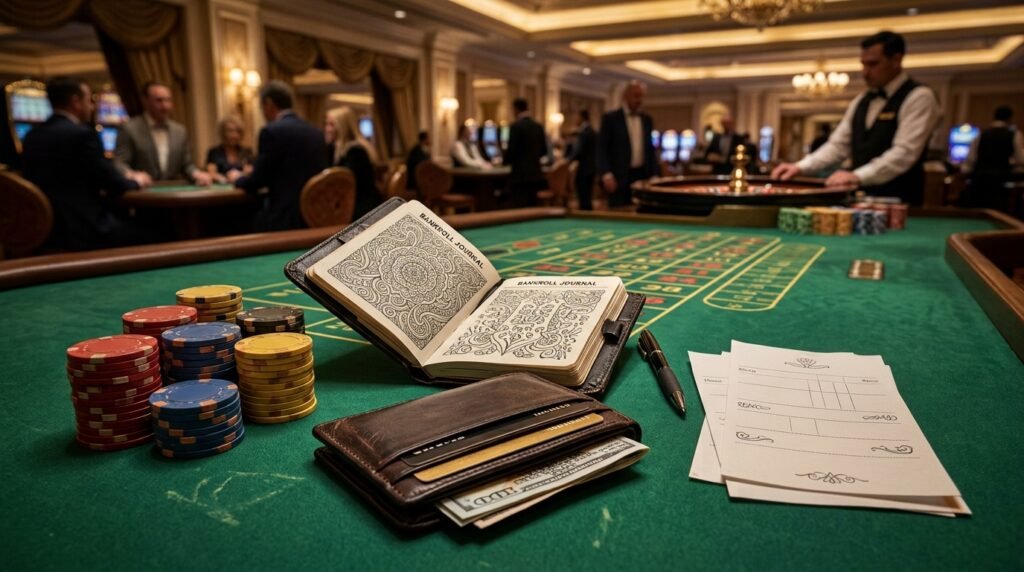
Casinos are built — literally, architecturally — to keep you playing longer than you planned. No clocks, no windows near the gaming floor, free drinks that lower your inhibitions around bigger bets. None of this is conspiracy theory; it’s documented casino design philosophy going back to Bill Friedman’s research in the 1990s. Knowing this doesn’t mean casinos are “evil,” it just means the environment isn’t neutral, and your budget needs to account for the fact that your future self, three hours and two cocktails in, might make worse decisions than the version of you reading this article right now.
That’s really the whole point of a hard budget. It’s not about restricting fun — it’s about making the decision once, while you’re sober and clear-headed, instead of remaking it fifteen times at the blackjack table.
Quick Reference: Sample Budgets by Player Type
| Player Type | Trip Length | Suggested Budget |
|---|---|---|
| Casual slots player | 3-4 hours | $100-$200 |
| Low-stakes table games | 3-4 hours | $150-$300 |
| Vegas weekend tourist | 3 days | $500-$1,000 |
| Serious poker player | Per session | $1,000 (5 buy-ins) |
| High-limit player | Per trip | $2,000+ |
These are starting points, not rules carved in stone — adjust based on your own financial comfort zone.
FAQs
Is $200 enough for a casino trip?
For a casual 2-3 hour session on slots or low-limit tables, $200 is a reasonable amount that can realistically last the whole visit if you manage your bet sizes and take breaks. It won’t stretch far at $25+ blackjack tables, though.
How much cash should I carry at a casino for safety reasons?
Beyond your gambling budget, only carry what you’re comfortable losing to theft or a bad night — most seasoned players keep the bulk of their trip funds in a hotel safe and only carry their daily session amount on the floor.
Should I bring my debit card to the casino floor?
Many experienced players deliberately leave debit and credit cards in their room or hotel safe. ATMs inside casinos are convenient by design — that convenience works against your budget, not for it.
What’s a good win/loss limit to set?
A common rule is a 20-30% stop-loss (stop playing if you lose 20-30% of your session bankroll) and a 50-100% win goal (consider cashing out at least half your winnings if you double your buy-in). It’s not scientific, but it gives you a decision point instead of playing on autopilot.
Do casinos track how much money I bring?
Casinos track what you play through their loyalty/rewards program (like MGM Rewards or Caesars Rewards) if you sign up and insert your card, but they don’t track cash you bring in that isn’t run through the system. Signing up for a players club is worth it, though — comps add up fast even at low stakes.
Final Thoughts
There’s no universal dollar figure that works for every player, every casino, or every night out — anyone telling you otherwise is oversimplifying a decision that’s really about your own finances and risk tolerance. What matters is doing the math before you walk in, not while you’re standing at a table watching your chips disappear.
Set your number, bring cash instead of cards, and treat whatever you lose as the price of entertainment — not an investment gone wrong. Remember: gambling should stay fun, not become a financial strategy. Must be 18+ (21+ at most U.S. casinos) to play, and if gambling ever stops feeling like entertainment, resources like the National Council on Problem Gambling (1-800-522-4700) are there to help.
Ready to plan your next casino trip? Set your budget today, pick your games, and walk in with a plan instead of a guess — your future self at the cashout window will thank you.