





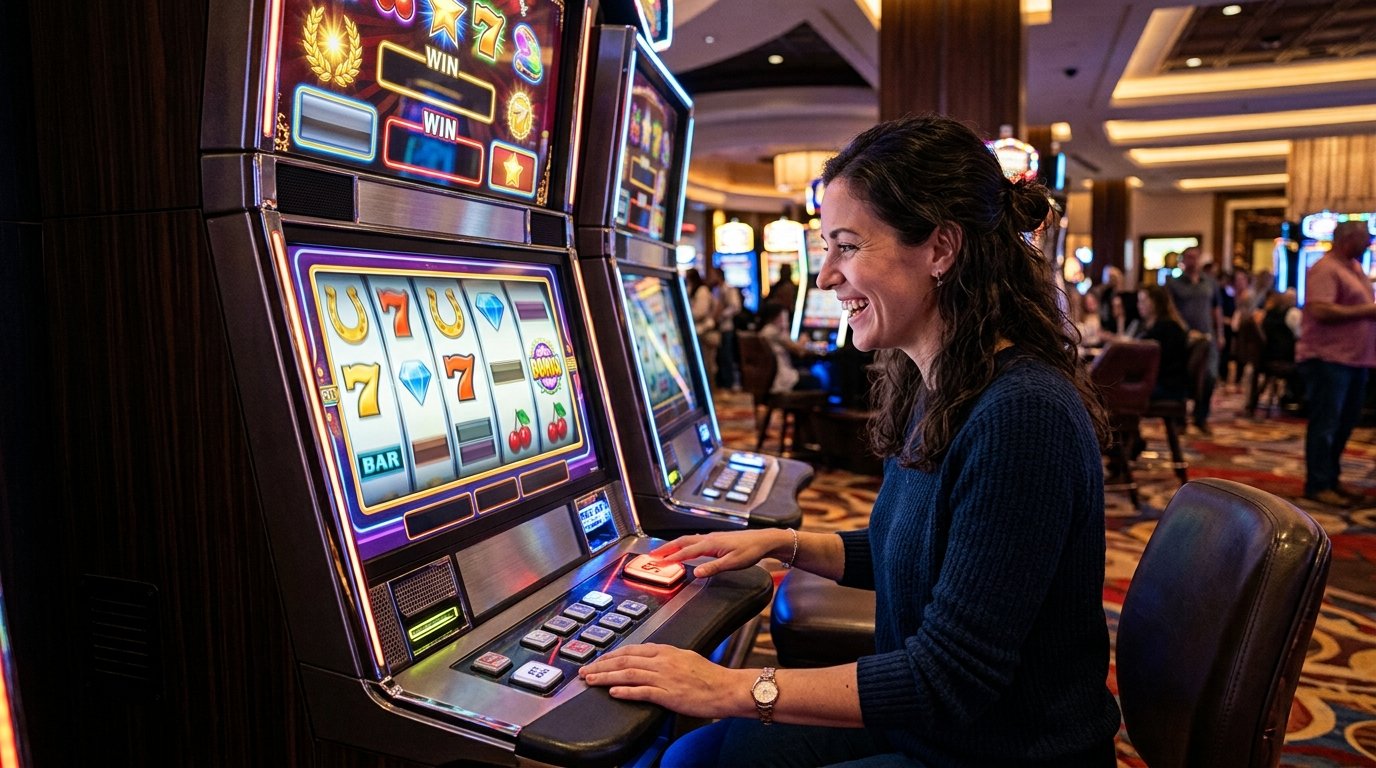
Quick Answer: Spin and Win refers to the classic slot machine format where players spin a set of reels and win when matching symbols line up on active paylines. Outcomes are determined by a random number generator (RNG), not by patterns, timing, or skill.
Introduction
Ever wondered why two spins that look almost identical can produce completely different results? That’s the paradox at the heart of Spin and Win: it feels predictable, but underneath, it’s driven by pure mathematics. If you’ve ever watched the reels blur past and asked yourself what’s actually happening behind the screen, you’re not alone—most beginners assume there’s a pattern to find, when in reality the system is built to be unpredictable by design.
This guide breaks down exactly how Spin and Win games work, from the rules and mechanics to the terminology insiders use and the mistakes newcomers commonly make. By the end, you’ll understand the logic behind the spin, not just the spin itself.
What Is “Spin and Win” and Why Beginners Struggle With It

Spin and Win is the general term for any game built around a simple loop: press a button, watch the reels spin, and see whether the symbols align into a winning combination. It’s the format most people picture when they think of a slot machine, whether that’s a physical cabinet or a digital version.
The confusion for beginners usually comes from three places:
- The visual presentation suggests momentum and control, even though the outcome is already determined before the reels stop.
- Paytables and bonus features vary wildly between games, so “the rules” aren’t actually universal.
- Near-misses (like two matching symbols and a third just above or below the line) feel meaningful, but they carry no extra significance in how the game calculates results.
Understanding that the spin is a visual layer on top of a math-based system is the single biggest shift in how beginners approach these games.
The Basic Rules of Spin and Win: Step-by-Step
While individual games differ, most Spin and Win formats follow the same basic sequence:
- Select your bet size. This usually includes a coin value and the number of paylines or ways to win.
- Press spin. The reels begin turning, either physically or through an animated digital sequence.
- Reels stop in sequence, typically left to right, revealing a final grid of symbols.
- The game checks for matches across active paylines or “ways to win” patterns.
- Winning combinations are highlighted, and any payout is calculated based on the paytable.
- Bonus triggers are checked, such as scatter symbols, wilds, or free spin icons.
- The balance updates, and the process resets for the next spin.
Every one of these steps is governed by rules set out in the game’s paytable, which is why reading it before playing is one of the most useful habits a beginner can build.
How the Mechanics Actually Work Behind the Scenes
This is where most of the confusion disappears once it’s explained clearly. Every Spin and Win game runs on a random number generator (RNG)—a piece of software that continuously generates numbers, even when no one is playing.
The moment you press spin, the RNG isn’t “deciding” in real time in the way people imagine. Instead:
- The RNG generates a result the instant the spin is triggered.
- That result is mapped onto the reel positions you see on screen.
- The animation of spinning reels is a visual layer added afterward, purely for presentation.
This means the outcome of a spin is fixed before the reels even start moving. Two related concepts explain the long-term behavior of these games:
- RTP (Return to Player): the theoretical percentage of wagered money a game returns to players over a very large number of spins.
- Volatility (or variance): how often and how large wins tend to be. Low-volatility games pay smaller amounts more often; high-volatility games pay less frequently but with larger potential payouts.
Neither RTP nor volatility predicts what happens on any single spin—they describe patterns that only appear over thousands or millions of spins.
Common Beginner Mistakes to Avoid
Most early mistakes come from misreading randomness as pattern. The most frequent ones include:
- Chasing a “hot” or “cold” machine. Since each spin is independent, previous results have no bearing on the next one.
- Believing a near-miss means a win is “close.” The RNG doesn’t track near-misses; they’re a visual outcome, not a mathematical one.
- Ignoring the paytable. Skipping this step means playing without understanding what symbols, multipliers, or bonus triggers actually do.
- Confusing volatility with odds. A high-volatility game isn’t “harder,” it simply distributes outcomes differently over time.
- Assuming bigger bets change the odds. Bet size affects payout amounts, not the underlying probability of a winning combination.
Pro Tip: Before playing any Spin and Win game, spend two minutes reading the paytable. It tells you exactly which symbols matter, how paylines are structured, and what triggers bonus rounds—information that removes most of the guesswork.
Key Terms and Terminology Explained
Spin and Win games come with their own vocabulary, and knowing it makes the whole experience far less confusing:
- Payline: A specific pattern across the reels that must contain matching symbols to trigger a payout.
- Ways to Win: An alternative system where matching symbols pay regardless of exact position, as long as they appear on adjacent reels.
- Wild Symbol: A symbol that substitutes for most other symbols to help complete a combination.
- Scatter Symbol: A symbol that often triggers bonus features regardless of its position on the reels.
- RTP (Return to Player): The theoretical long-term payout percentage of a game.
- Volatility: How predictable or variable the size and frequency of wins tend to be.
- Paytable: The reference chart showing symbol values, active paylines, and bonus rules.
Tips for Understanding Spin and Win Better
These tips are about comprehension, not strategy for beating the system—since Spin and Win outcomes can’t be predicted or controlled.
- Read the paytable before every new game. Every title has different symbol values and bonus structures.
- Learn the difference between RTP and volatility, since they describe two separate things: long-term return versus short-term variance.
- Watch a demo or free-play version first, if available, to understand the mechanics without financial pressure.
- Track how bonus features trigger, since scatter and wild symbols often behave differently across games.
- Set a mental budget for how long you’ll explore or observe a game, purely as a way to manage time and attention.
Pro Tip: If a game offers a “help” or “info” screen, it usually breaks down exact payline patterns and bonus trigger conditions—often more clearly than the main paytable.
Myths vs Facts About Spin and Win
| Myth | Fact |
|---|---|
| A machine is “due” for a win after a losing streak | Each spin is independent; past results don’t influence future ones |
| Near-misses mean you’re close to winning | Near-misses are visual only and hold no mathematical weight |
| Playing faster or slower changes your odds | Spin speed has no effect on the RNG-determined outcome |
| Higher bets improve your odds of winning | Bet size changes payout amounts, not winning probability |
| Time of day affects payout frequency | RNG systems operate independently of time or player volume |
Pro Tip: If you remember one fact from this entire guide, make it this: RNG-based games have no memory. Every spin starts from a completely neutral mathematical state.
Comparison Table: Types of Spin and Win Games
| Game Type | Typical Volatility | Bonus Features | Best Understood By |
|---|---|---|---|
| Classic 3-reel | Low to Medium | Minimal, simple paylines | Beginners learning the basics |
| Video slot (5-reel) | Medium | Wilds, scatters, free spins | Players wanting varied mechanics |
| Ways-to-win format | Medium to High | Cluster pays, no fixed paylines | Players comfortable with flexible rules |
| Progressive-style | High | Bonus rounds, escalating features | Players who understand long-term variance |
Conclusion
Spin and Win looks simple on the surface, but it’s built on a foundation of RNG technology, paylines, and probability concepts like RTP and volatility. The three things worth remembering: outcomes are determined instantly by the RNG, past spins never influence future ones, and reading the paytable is the fastest way to actually understand what you’re looking at.
So next time you see the reels spin, what do you think is really happening behind that animation? If this raised more questions than it answered, a deeper dive into how RTP and volatility interact might be your natural next read.
Understanding the mechanics doesn’t just satisfy curiosity—it changes how you see every spin that follows.
FAQs
What does “Spin and Win” actually mean?
Spin and Win describes the core mechanic of most slot games: players spin a set of reels, and matching symbols on active paylines result in a payout. It’s a broad term covering classic, video, and ways-to-win slot formats, all of which rely on a random number generator to determine outcomes rather than skill or timing.
Is Spin and Win based on luck or skill?
It’s based entirely on luck, since outcomes are generated randomly by an RNG the instant a spin is triggered. There’s no skill-based input like timing or button pressure that can influence the result, which distinguishes these games from skill-based formats.
How do paylines work in Spin and Win games?
Paylines are specific patterns across the reels where matching symbols must land to trigger a payout. Common formats include:
- Fixed paylines, which stay constant across every spin.
- Adjustable paylines, which players can select before spinning.
- Ways-to-win systems, which pay for adjacent matches regardless of exact position.
What is RTP in a Spin and Win game?
RTP, or Return to Player, is the theoretical percentage of wagered money a game returns over a very large number of spins. It’s a long-term statistical average, not a guarantee for any individual session, and it’s typically listed in the game’s information screen.
Why do near-misses feel so common in Spin and Win games?
Near-misses are a visual design choice, not a mathematical signal. The reel symbols are arranged so that close-looking combinations appear regularly, but the RNG result was already determined before the reels stopped, meaning a near-miss carries no extra probability of a future win.
Does bet size affect the odds in Spin and Win?
No. Bet size determines how much a winning combination pays out, but it doesn’t change the underlying probability of that combination occurring. The RNG calculates outcomes independently of wager amount.