






Pull up a blackjack table in Vegas — or open your favorite real-money app in a legal state like New Jersey or Michigan — and ask the dealer why the game is called blackjack. Nine times out of ten, you’ll get a shrug. Maybe a guess about the jack of spades being black. It’s a reasonable guess. It’s also wrong, and the real story is way more interesting than a card color coincidence.
I’ve been writing about table games and researching casino history for the better part of a decade now, and this is one of those questions that comes up constantly in player forums and Reddit threads — usually followed by three or four confidently incorrect answers. So let’s actually settle it. Why is it called blackjack, and what does that name have to do with the game you’re playing today, whether it’s a $5 table in Atlantic City or a live dealer stream at 2am?
Short version: it started as a marketing gimmick from over a century ago, in a game that used to be called something else entirely. Long version — that’s the rest of this article.
The Short Answer
Blackjack got its name from a promotional bonus that early 20th-century American casinos offered to get people to sit down and play. The game itself was originally called “21” (and before that, a French game called Vingt-et-Un). To spice things up, some Nevada gambling halls started paying out a bonus — often 10-to-1 — if a player’s winning hand included the ace of spades along with either the jack of spades or jack of clubs, both of which are black-suited cards.
Players started calling that specific winning combination a “blackjack.” The name stuck to the hand first, then eventually took over as the name for the entire game. The bonus payout disappeared decades ago. The name never left.
That’s the one-paragraph version. Now let’s dig into how weird and specific this actually got, because the details matter more than most articles bother explaining.
From Vingt-et-Un to 21: The Game Before It Had a Name Problem
Blackjack’s ancestor is a French card game called Vingt-et-Un, which literally translates to “twenty-one.” Some gambling historians trace elements of it back even further, to a Spanish game called “Trente-un” (thirty-one) referenced in Miguel de Cervantes’ writing in the early 1600s. Cervantes himself was apparently a card player, and the character in his story is described as a cardsharp skilled at cheating in the game — which tells you gambling and card manipulation have been tangled together for a very, very long time.
Vingt-et-Un made its way to American shores with French colonists and settlers, and by the time it hit U.S. gambling saloons in the 1800s, it had been anglicized into “21.” Simple, descriptive, boring. It told you exactly what the goal was — get as close to 21 as possible without going over — but it didn’t exactly jump off a casino marquee.
And that’s the actual problem casino operators were trying to solve when the “blackjack” name showed up.
The Bonus That Started It All
Here’s where it gets specific, and where a lot of other articles online get lazy. In early 1900s Nevada, when gambling was still operating in a legal gray zone in a lot of places (Nevada didn’t fully legalize casino gambling statewide until 1931), operators running 21 games needed a hook. Table games were competing for attention against faro, poker, and dice games, and 21 wasn’t drawing crowds on its own.
So some houses started offering a side bonus: if you hit 21 specifically with the ace of spades and either black jack (spades or clubs), the dealer paid you extra — commonly cited as 10-to-1 odds, though the exact payout varied by house since there was no standardized rulebook back then. This wasn’t a universal rule across every casino in the country. It was localized, informal, and honestly a little inconsistent, which is very on-brand for how early American gambling operated before state regulation cleaned things up.
Players loved it. A regular winning hand in 21 paid even money. A “blackjack” hand paid 10-to-1. That’s a massive difference, and gamblers being gamblers, the word spread fast. People started asking dealers, “did you get a blackjack?” instead of asking about their 21. The nickname for the bonus hand eventually swallowed the nickname for the entire game.
By the time the bonus payout quietly disappeared — probably sometime in the 1920s or 1930s as rules standardized — the name “blackjack” had already replaced “21” in common usage across most of the country. It’s a strange evolutionary quirk: the incentive that created the name vanished, but the name survived it by a full century.
Why the Bonus Went Away But the Name Didn’t
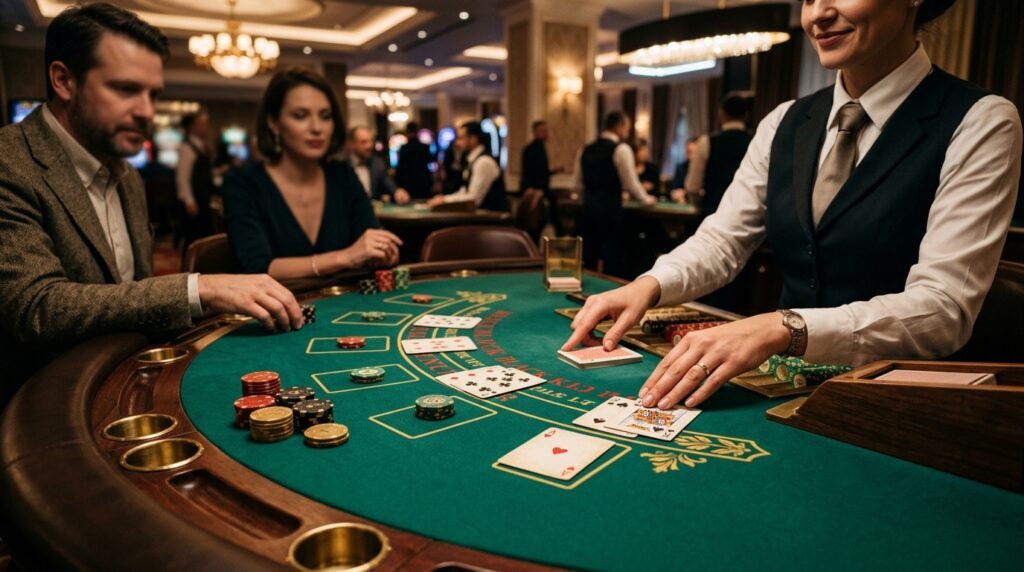
I’ll be honest, this is the part that surprises most players when I explain it. If the special 10-to-1 blackjack bonus doesn’t exist anymore in standard blackjack rules, why do casinos still call a natural 21 a “blackjack” today?
Because the term had already become the identity of the game, not just a bonus condition. Once “blackjack” was printed on casino signage, used in newspaper gambling coverage, and repeated by thousands of players across state lines, there was no going back to “21.” Names are sticky that way — think about how “Kleenex” outlasted “facial tissue” as the term everybody actually uses.
What did survive from the original bonus, in a diluted form, is this: today, a natural blackjack (an ace plus a 10-value card dealt as your first two cards) still typically pays out at better odds than a regular win — usually 3-to-2 at most legit Vegas and Atlantic City tables, though you’ll increasingly run into 6-to-5 payouts on some Strip games, which, for the record, is a worse deal for players and something I’d actively steer beginners away from if you have a choice between tables. Always check the felt for the payout ratio before you sit down. It’s printed right on the table.
So the bonus logic never fully vanished — it just evolved from “ace plus two specific black cards” into “ace plus any 10-value card,” and the payout shrank from 10-to-1 down to 3-to-2. Still a good deal. Just not the wild jackpot early 1900s gamblers were chasing.
Does the Suit Color Even Matter Anymore?
No — and this trips people up constantly. Modern blackjack rules don’t care whether your ace and jack are black, red, or a mix. Ace of hearts plus jack of diamonds pays exactly the same as ace of spades plus jack of clubs. The “black” in blackjack is purely historical residue from a rule that hasn’t existed in nearly a century.
I’ve had newer players ask dealers at physical casinos whether suit color affects their payout, and dealers usually just say “nope, any ace and any 10-card works the same.” It’s one of those fun facts that’s more interesting as trivia than as anything that impacts your actual strategy at the table today.
A Few Other Names Blackjack Has Gone By
Part of why the naming history is so tangled is that blackjack picked up regional nicknames as it spread:
- Pontoon — the British and Australian version of the game, with slightly different rules around splitting and doubling down
- Vingt-et-Un — still used in some European casinos as a callback to the French original
- 21 — still used casually by American players today, even though “blackjack” is the official name almost everywhere
If you’ve ever played at a UK-facing online casino and seen “Pontoon” on the game list, that’s not a totally different game — it’s blackjack’s British cousin, with its own quirks in how doubling and five-card tricks work.
Why This History Actually Matters for Players
I get it — you probably didn’t come here for a history lecture, you want to know why the name exists and then get back to figuring out basic strategy charts. But there’s a small practical takeaway buried in this history: the name “blackjack” is a reminder that bonus payouts and promotional rules have always been part of how this game gets marketed to you.
That’s just as true in 2026 as it was in 1920s Nevada. Modern online casinos run blackjack tournaments, side bets like Perfect Pairs and 21+3, and welcome bonuses tied specifically to table game play. When you see a promo offering extra value for a specific hand or bet type, that’s the exact same playbook operators were running a hundred years ago — dress up the base game with a juicy bonus condition to get players excited. The house edge math underneath rarely changes as dramatically as the marketing suggests, so it’s worth reading the terms on any blackjack-specific bonus before you assume it’s free money.
FAQs
Why is blackjack called blackjack and not 21?
The game was originally called 21 (from the French Vingt-et-Un). Early 1900s Nevada casinos started paying a bonus for a hand containing the ace of spades plus a black jack, and players started calling that hand — and eventually the whole game — “blackjack.”
Does the suit color of the jack still matter in blackjack?
No. Modern blackjack pays the same 3-to-2 (or 6-to-5, depending on the table) for any ace paired with any 10-value card, regardless of suit or color. The original color-specific rule disappeared roughly a century ago.
Is blackjack the same game as 21?
Yes, functionally. “21” is the older, informal name for the same card game most people now call blackjack. You’ll still hear both terms used interchangeably by American players.
What’s the difference between blackjack and Pontoon?
Pontoon is the British/Australian variant of blackjack, with different rules around splitting pairs, doubling down, and how a five-card hand is treated. It shares the same French ancestry as American blackjack.
Why do some casinos pay 6-to-5 instead of 3-to-2 for a blackjack?
It’s a rule change casinos introduced to increase the house edge on natural blackjack payouts. It’s legal and common on lower-limit tables, especially on the Vegas Strip, but it’s a worse deal for players than traditional 3-to-2 tables — worth seeking out the better payout when you have options.
Blackjack’s name is a leftover from a bonus that stopped existing before most of our grandparents were born, and honestly, that’s part of what makes casino history fun to dig into. If you’re heading to a table soon, take two minutes to check the payout ratio printed on the felt before you sit down — it still matters more than most players realize.
18+. Gamble responsibly. Blackjack, like all casino games, carries a house edge and no strategy guarantees a win. If gambling stops being fun or starts affecting your finances or relationships, resources like the National Council on Problem Gambling (1-800-522-4700) are available for support