





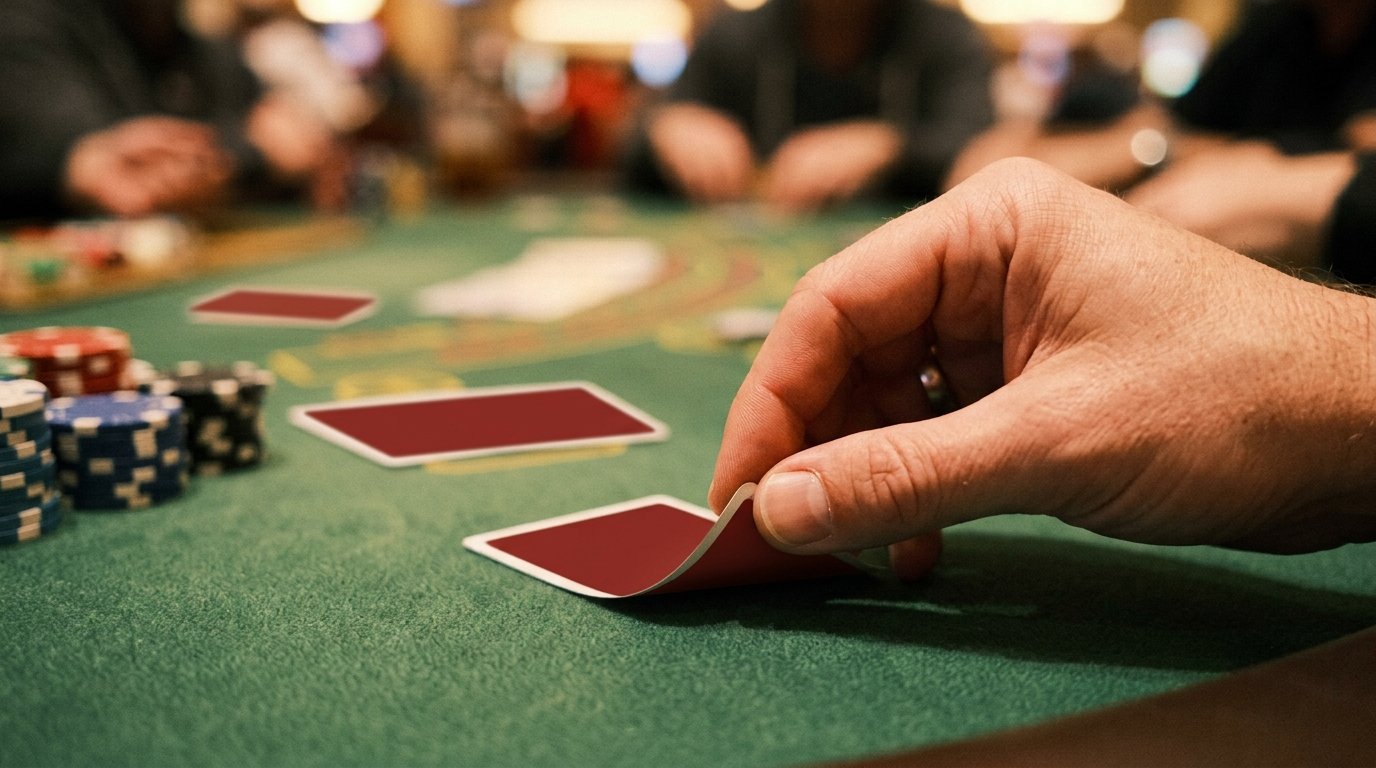
Quick Answer: Live casino baccarat squeeze is a slow-reveal ritual where a player peels back the corners of the cards to build suspense before the values are shown. It doesn’t change the odds or rules of baccarat — it only changes how the outcome is revealed to the table.
Picture a table where nobody speaks for ten full seconds, yet everyone leans forward like something enormous is about to happen. That’s what a live casino baccarat squeeze looks like from the outside, and it confuses almost every beginner who stumbles onto a live dealer baccarat stream for the first time. The cards are already printed. The result is already decided. So why does the whole table hold its breath?
The squeeze is a tradition, not a mechanic. It’s a slow, deliberate way of revealing a card that turns a simple comparison of numbers into a small theatrical event. In this guide, you’ll learn exactly what the squeeze is, how the ritual unfolds step-by-step, the mechanics behind it, the mistakes new viewers make when trying to understand it, the vocabulary that goes with it, and how the practice compares across different live dealer formats.
What Is a Live Casino Baccarat Squeeze — and Why Beginners Struggle With It
At its core, a squeeze is simply a slow card reveal. Instead of flipping a card face-up in one motion, a player (or occasionally the dealer, in “banker squeeze” formats) bends back one corner at a time, checking the pip or the shape of the printed number before letting anyone else see it.
Beginners struggle with this for a simple reason: baccarat itself is one of the simplest card comparison games ever designed, so the elaborate reveal feels completely out of proportion to the math happening underneath it. New viewers often assume the squeeze somehow influences the card, delays a decision, or changes the payout. It does none of those things. The card was determined the moment it left the shoe. The squeeze only delays the moment everyone else learns what that card is.
This gap between “what’s actually happening” (a card is being read) and “what it looks like” (a dramatic ceremony) is exactly why the tradition confuses newcomers and fascinates long-time viewers at the same time.
The Squeeze Rules Explained Step-by-Step
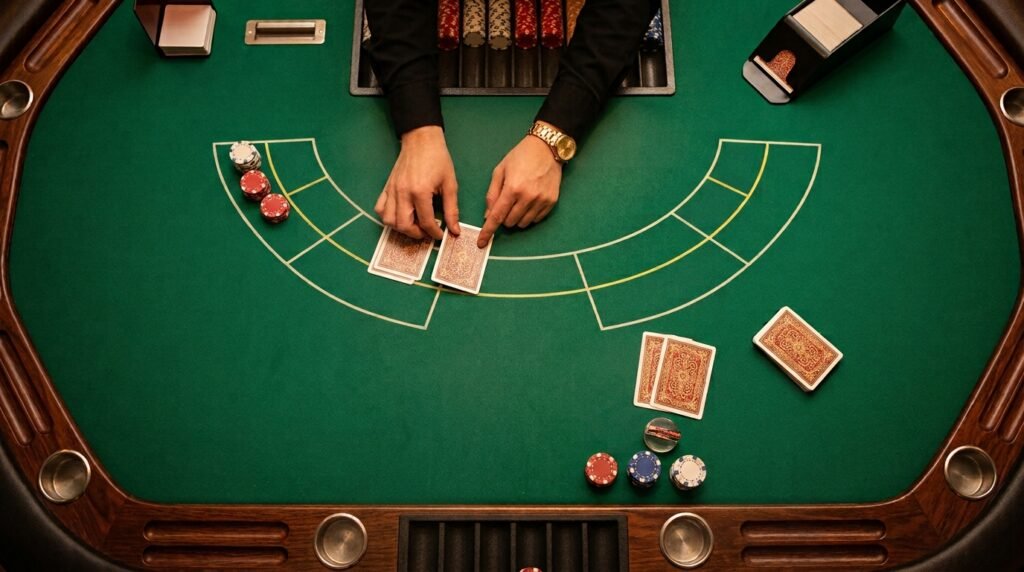
The process itself follows a fairly consistent sequence across most live dealer studios, even though house style varies slightly from provider to provider.
- The cards are dealt — Two cards go to the Player hand and two to the Banker hand, following standard baccarat dealing rules.
- The dealer identifies who squeezes — Typically, the player with the largest wager on that side of the table is invited to reveal the cards. In studio formats with no live players, the dealer performs the squeeze instead.
- The corner is bent slowly — The chosen card is turned face-down, then curled at one corner just enough to expose the printed pip, without revealing the full card.
- The reveal is teased in stages — Many squeezers pause halfway, cover the card again, or trade glances with the camera before continuing, extending the moment further.
- The card is finally shown — Once the corner reveal confirms the value to the squeezer, the card is placed face-up for the table and the camera.
- The process repeats for the second card, and again for any third card drawn under baccarat’s standard drawing rules.
- The hands are compared and paid out exactly as they would be in a fast, no-frills version of the game.
Nothing in this sequence changes point totals, drawing rules, or payouts. It’s purely presentational.
How the Squeeze Actually Works Behind the Scenes
From a mechanical standpoint, the squeeze relies entirely on the physical printing of the cards, not on any special equipment. Casino-grade playing cards use a corner index — a small printed number and suit symbol in the top corner — specifically so a card can be partially identified without full exposure. This corner index is what makes squeezing physically possible in the first place; without it, there would be nothing to “peek” at.
Pro Tip: If you’re watching a stream and want to predict the outcome before the full reveal, keep your eyes on the corner the squeezer curls first. Sharp-eyed viewers can often catch a flash of the pip a second or two before the formal reveal.
Live studios also script pacing around the squeeze. Dealers are trained to let the moment breathe — pausing the broadcast commentary, dimming their own reactions, and allowing the camera operator to cut to close-up angles of the bending card. None of this is improvised; it’s a deliberate broadcast choice designed to replicate the tension of a physical casino floor, where squeezing has existed for decades longer than live-streamed tables have.
Common Beginner Mistakes to Avoid When Learning the Squeeze
New viewers trip over the same handful of misunderstandings again and again.
- Assuming the squeeze changes the outcome. It doesn’t. The card’s value is fixed the moment it’s dealt; only the reveal timing changes.
- Confusing squeeze etiquette with strategy. Squeezing has no impact on the mathematics of the game — it’s a social ritual, not a technique for shifting probability.
- Thinking every studio squeezes every hand. Many fast-paced or “speed” baccarat tables skip squeezing entirely to keep rounds moving quickly.
- Believing the squeezer has special information. The squeezer sees the same printed card everyone eventually sees — they simply see it a few seconds sooner.
- Overestimating how long a squeeze lasts. Most reveals take somewhere between five and twenty seconds, not the drawn-out minutes it can feel like on a dramatic stream edit.
Squeeze Terminology You Should Know
A handful of terms show up constantly around this ritual, and knowing them makes any live stream far easier to follow.
- Squeeze — the act of slowly bending a card to reveal its value.
- Corner index — the small printed number in the card’s corner used for partial reveals.
- Natural — a two-card total of 8 or 9, which sometimes shortens the squeeze since the outcome is already strong.
- Banker squeeze — a format where the dealer, not a player, performs the reveal on behalf of the table.
- Cut card — the marker used to indicate when a shoe of cards is nearing its end, unrelated to squeezing but often mentioned in the same breath by commentators.
- Third card rule — the standard drawing rule that determines whether a third card is added to Player or Banker hands, applied after the squeeze is complete.
Tips for Following a Squeeze Like a Pro
Understanding the ritual is one thing; following it comfortably as a viewer is another skill entirely.
Pro Tip: Watch the dealer’s hands rather than their face. Experienced dealers keep their expressions neutral by training, but hand movement — how quickly or slowly a card is curled — often telegraphs how confident the squeezer feels about what they’re seeing.
Focus on pattern recognition rather than prediction. Over time, you’ll notice that certain studios have a signature pacing style: some squeeze every card on every hand, while others reserve the ritual for high-stakes rounds only. Learning a studio’s rhythm makes the whole experience easier to follow, the same way learning a sports commentator’s cadence makes a broadcast easier to enjoy.
It also helps to separate entertainment value from analysis. The squeeze exists to build atmosphere, not to give you an edge. Treat it as theater layered on top of a simple card comparison game, and the tension becomes something to enjoy rather than something to decode.
Myths vs Facts About Baccarat Squeeze
| Myth | Fact |
|---|---|
| Squeezing changes the card’s value | The card is fixed the instant it’s dealt; squeezing only delays the reveal |
| Only high-roller tables use a squeeze | Many mid-stakes and themed tables squeeze too — it depends on studio format, not bet size |
| The squeezer gains an advantage | The squeezer sees the result seconds earlier, not a different result |
| Squeezing is required by baccarat rules | Squeezing is a presentation choice; standard baccarat rules never mention it |
| A slow squeeze means a stronger hand | Pacing is often driven by showmanship and studio habit, not the card itself |
Squeeze Styles Compared
Different live dealer formats handle the ritual in noticeably different ways. Here’s how the most common styles stack up.
| Squeeze Style | Who Performs It | Typical Pace | Best For |
|---|---|---|---|
| Player squeeze | Highest-wagering player at the table | Slow, theatrical | Viewers who enjoy full ceremony |
| Banker squeeze | Dealer, on behalf of the table | Moderate | Studios without live in-person players |
| No squeeze / speed format | No one — cards flip instantly | Fast | Viewers who prefer quick rounds |
| Multi-camera squeeze | Player, with dedicated close-up camera | Slow, highly produced | Viewers watching on larger screens |
Conclusion
The live casino baccarat squeeze is a piece of theater built on top of one of the simplest card games in existence. To recap: the ritual never changes a card’s value or the game’s odds, it follows a fairly predictable step-by-step sequence built around a card’s printed corner index, and it varies noticeably depending on which studio format you’re watching. Once you understand that the drama is presentational rather than mathematical, the whole tradition becomes far easier to enjoy for exactly what it is.
So next time you land on a live stream and see a dealer or player curling a corner in slow motion, what do you think you’ll notice first — the pacing, the hand movement, or the crowd’s reaction? If terminology is still tripping you up, a broader glossary of baccarat terms is a natural next read.
A slow reveal, after all, is still just a reveal.
FAQS
What does “squeeze” mean in baccarat?
In baccarat, a squeeze refers to the slow, deliberate way a card is revealed. Instead of flipping the card face-up immediately, a player or dealer bends back one corner at a time to check the printed value before the full table sees it. It’s a presentation style, not a rule that affects gameplay or payouts in any way.
Does live casino baccarat squeeze change the odds?
No. The odds and drawing rules of baccarat stay identical whether a hand is squeezed or flipped instantly. The card’s value is set the moment it leaves the shoe; squeezing only changes how long the table waits before seeing it. It’s purely about pacing and atmosphere, not probability.
Who gets to squeeze the cards at a live table?
Typically, the player with the largest wager on the Player or Banker side is invited to perform the squeeze. In studio-only formats without live in-person players, the dealer performs a “banker squeeze” instead. Either way, the process follows the same basic steps:
- The card is turned face-down.
- One corner is bent to expose the pip.
- The full card is revealed once confirmed.
Why do some baccarat tables skip the squeeze entirely?
Many speed-focused or high-volume tables skip squeezing to keep rounds moving quickly, since the ritual can add ten to twenty seconds per hand. Studios balance viewer preference against pacing — some audiences want ceremony, while others prefer as many rounds per hour as possible.
Is baccarat squeeze only used in live casino formats?
Squeezing predates online and live-streamed baccarat by decades and originated at physical casino tables, particularly in high-stakes rooms. Live casino platforms adapted the tradition for camera-friendly viewing, using close-up angles to recreate the same tension that existed long before streaming technology made it visible to remote audiences.
How long does a typical baccarat squeeze take?
Most squeezes last somewhere between five and twenty seconds per card, though dramatic pauses can stretch a reveal further. The exact timing depends on the squeezer’s personal style, the studio’s broadcast pacing, and whether commentary or music is layered over the moment to build additional suspense.