






Picture this: you’re staring at a lobby with 400 slot titles, a dozen blackjack variants, and three different roulette wheels, and all you want is a game you can understand in under ten seconds. That’s basically the entire pitch for casino war game online — it’s the card game you played as a kid, dressed up with a betting rail and a tie bonus. High card wins. That’s it. No strategy charts, no memorizing when to split eights.
I’ve tested this game across a handful of US-facing platforms, and I’ll be upfront: it’s not going to replace blackjack as your main game. But it scratches an itch that a lot of players — especially newer ones — don’t realize they have. Sometimes you just want to bet, see a result, and move on without thinking too hard.
In this piece, I’m covering how casino war actually works online, the real house edge (and why the tie bet is a trap), where you can legally play it in the US, and whether it’s actually worth your bankroll compared to other table games. I’ll also flag the stuff most “how to play” articles gloss over.
What Is Casino War, Exactly?
Casino war is a card game based on the schoolyard game “war” — you and the dealer each get one card, higher card wins, and if there’s a tie, you get options. That’s the entire game loop. There’s no hitting, no doubling down, no reading the table for a count.
Here’s the round-by-round breakdown:
- You place your ante bet (usually $1 to $100, depending on the table limits).
- You get one card face up. The dealer gets one card face up.
- Whoever has the higher card wins even money on the ante.
- If it’s a tie, you get two choices: surrender (forfeit half your bet) or go to war (double your bet, and the dealer burns three cards before dealing you both a new card).
- If you go to war and win, you get paid even money on just the raise portion — the original ante becomes a push.
- If you go to war and lose, you lose the whole thing — ante and raise.
Card ranking follows standard order (Ace high), and most online versions use six or eight decks shuffled together, which matters more than you’d think for the tie frequency.
How the Tie Bet Actually Works (And Why It’s Overhyped)
Before every hand, most online tables let you place an optional side bet on a tie, usually paying 10:1. On paper, that sounds tempting — a tie only happens roughly 1 in 13 hands with a single deck, but with the six-to-eight deck shoes used online, that probability shifts slightly and the math gets worse for you, not better.
I’ll be blunt about this one: skip the tie bet. The house edge on it typically runs between 18% and 29%, depending on the deck count and paytable the site uses. Compare that to the base ante bet, which sits around 2.88% house edge (or lower if you always go to war on ties instead of surrendering). The tie bet is the kind of thing casinos love to advertise because a 10:1 payout looks exciting, but the actual math behind it is one of the worst bets you’ll find on any table game menu, online or off.
The Real House Edge — And Why “Always Go to War” Is the Right Call
This is where a lot of casual guides get lazy and just say “the house edge is about 2.9%” without explaining the decision that gets you there.
When you tie with the dealer, you have two options:
- Surrender — you get back half your ante and the hand ends.
- Go to war — you double your bet and draw again.
Mathematically, going to war every single time is the better play. Surrendering caps your loss at 50% of the ante immediately, but the war option has better expected value long-term because you’re not conceding anything on a coin-flip-adjacent scenario. Basic strategy here isn’t complicated like blackjack — it’s one rule: always go to war. Some sites even auto-select this for you if you toggle “auto-play,” which honestly makes casino war one of the few games online where the “optimal” play is baked into the default settings.
With that strategy, you’re looking at a house edge of roughly 2.88%, which puts it in a similar range to a single-zero roulette bet on red/black, though still worse than most blackjack variants played with correct basic strategy.
Where to Legally Play Casino War Online in the US
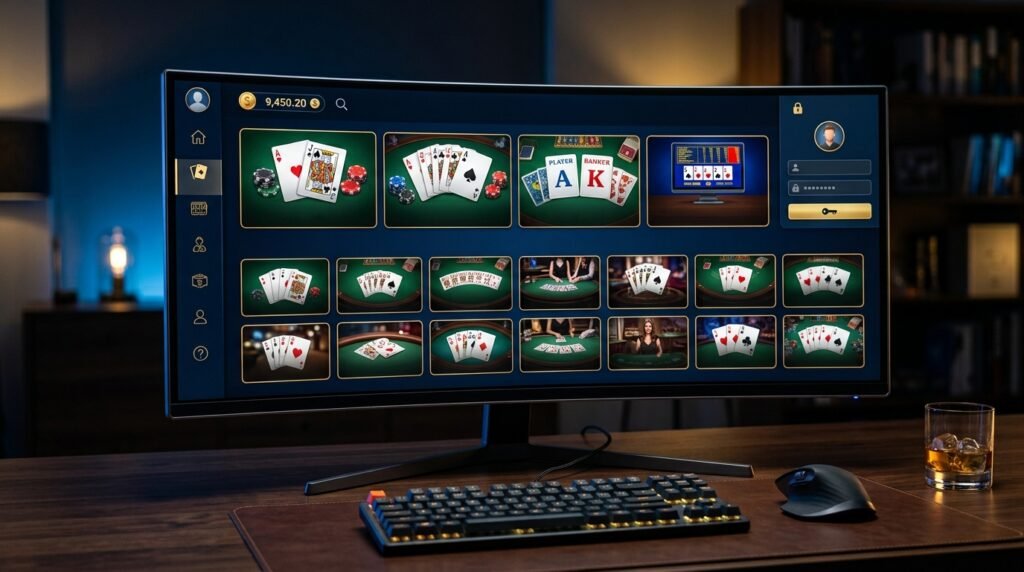
This is the part that trips people up. Casino war availability depends heavily on your state, because the US doesn’t have a single unified online casino market — it’s state by state.
States with regulated real-money online casinos (as of my last check): New Jersey, Pennsylvania, Michigan, Connecticut, West Virginia, Delaware, and Rhode Island. If you’re in one of these, platforms like BetMGM, Caesars Palace Online, and Borgata Casino typically carry casino war in their live dealer or RNG table game sections.
States without regulated online casinos but with sweepstakes-style platforms: places like Chumba Casino and LuckyLand Slots operate under a sweepstakes model using virtual currency (Sweeps Coins) that can be redeemed for prizes, rather than direct real-money wagering. These are legal in most states because they don’t involve a traditional purchase-to-wager structure, though a handful of states (Washington, Idaho, Michigan, Nevada) restrict or ban them outright.
Honestly, if you’re in a state without regulated online casinos, sweepstakes platforms are your most realistic option for playing casino war online without crossing into legally murky territory. Just double-check your specific state’s current rules before depositing anything, since this landscape shifts more often than people expect.
Live Dealer vs. RNG Casino War: Which Should You Play?
Most regulated platforms offer two versions:
- RNG (Random Number Generator) casino war — instant results, no dealer, plays fast. Good for players who want quick rounds and don’t care about the social element.
- Live dealer casino war — streamed from a studio with a real dealer, other players can join the same table, slower pace, closer to the retail casino feel.
When I tested Evolution Gaming’s live casino war table through a couple of the New Jersey platforms, the pacing felt noticeably slower than RNG — probably 40-50 hands an hour versus what feels closer to 200+ on the automated version. If you’re bankroll-conscious, that pacing difference matters a lot, because fewer hands per hour means fewer opportunities for the house edge to grind against you over a session.
Players often report preferring RNG versions for casual play precisely because you can knock out 20 quick hands on a lunch break, whereas live dealer tables ask for more of a time commitment.
Casino War vs. Other Simple Table Games: How Does It Stack Up?
If you’re choosing between casino war and other “easy to learn” table games, here’s roughly how the house edges compare with correct play:
- Baccarat (banker bet): ~1.06% house edge
- Blackjack (basic strategy): ~0.5%–1% depending on rules
- Casino war (always go to war): ~2.88%
- European roulette (single zero): ~2.7%
- American roulette (double zero): ~5.26%
So casino war sits in a middling spot — better odds than American roulette, but worse than baccarat or blackjack. It’s not the best value bet on the floor, but it’s also nowhere near the worst. If your priority is simplicity over squeezing out every fraction of a percent in your favor, it’s a reasonable trade-off.
Tips If You’re Going to Play
A few things I’d actually tell a friend before they sat down at a casino war table:
- Skip the tie side bet. I know I already said this, but it bears repeating because it’s the single biggest bankroll leak in this game.
- Set a hands-per-session limit, not just a dollar limit. Because rounds move so fast (especially RNG versions), it’s easy to blow through a session budget in minutes without realizing it.
- Look for tables with a “surrender” option clearly displayed — some lower-tier platforms bury it or default to “go to war” without telling you, which isn’t necessarily bad math-wise, but you should know your options.
- Try the free-play or demo mode first if the platform offers it. Most regulated US sites let you play casino war without real money before you commit a deposit.
FAQs
Is casino war rigged online?
Regulated platforms use certified RNGs audited by independent testing labs like iTech Labs or eCOGRA, so the game isn’t “rigged” in the sense of manipulated outcomes. The house edge is built into the payout structure itself, not hidden manipulation.
What’s the minimum bet for online casino war?
It varies by platform, but most US regulated sites set ante minimums between $1 and $5, with some going as low as $0.50 on RNG tables.
Can I play casino war for free before betting real money?
Yes, most regulated operators and several sweepstakes casinos offer demo or free-play modes so you can learn the interface before wagering anything.
Is the tie bet ever worth it in casino war?
Almost never. With a house edge often exceeding 18%, it’s one of the worst side bets in the table games category. Stick to the base ante bet.
Does casino war require any strategy?
Just one rule matters: always choose to go to war rather than surrender when you tie. Beyond that, there are no decisions that affect the outcome — it’s purely a card comparison game.
Casino war online isn’t going to become your go-to game if you’re chasing the best possible odds, but if you want something fast, easy, and genuinely fun for a low-stakes session, it earns its spot in the lobby. Try a free-play round on a licensed platform first, skip the tie bet, and always go to war on a push — that’s really the whole strategy guide in one sentence.