





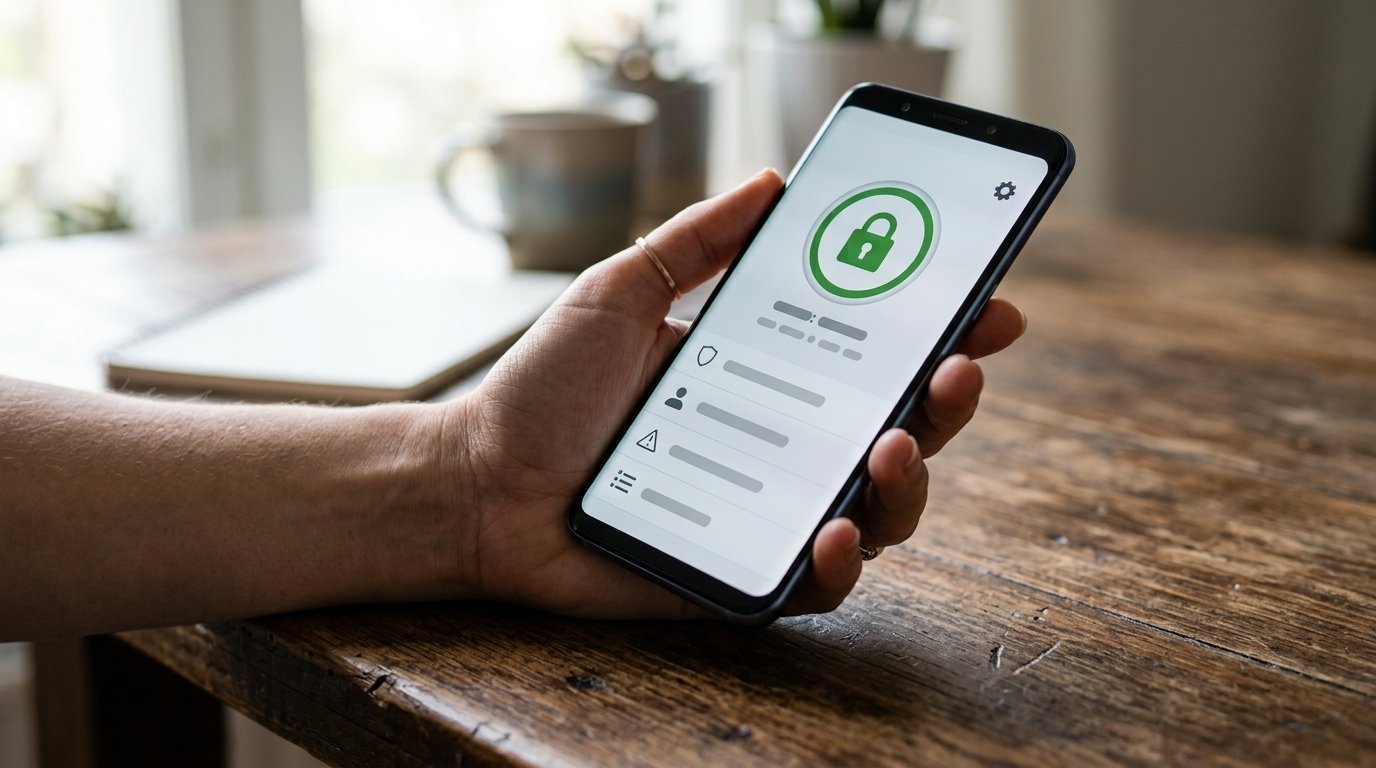
Quick Answer: The safest online casino apps hold a licence from a recognized regulator, use SSL/TLS encryption to protect data, publish independently audited payout percentages, and offer built-in responsible gambling tools. Checking these four things takes less than five minutes and tells you more than any review site can.
Ever wondered why two casino apps offering the exact same slot game can feel completely different the moment you open them? One asks for a licence number before you even scroll past the homepage. The other buries that information three menus deep, if it exists at all. That gap is exactly what separates the safest online casino apps from the ones that simply look polished.
This guide breaks down what “safe” actually means in the context of a gambling app, how licensing and encryption work behind the scenes, which red flags matter most, and how to evaluate any app on your own terms — without relying on marketing claims or star ratings alone.
What Makes an App “Safe” — and Why Beginners Get It Wrong
Most people judge safety the way they judge a restaurant: by how clean the front of house looks. A slick interface, fast loading times, and a big welcome banner feel reassuring. None of that has anything to do with actual security.
Real safety lives in the parts of an app you can’t see with a casual glance — the licensing body that oversees it, the encryption protocol handling your data, and the auditing firm checking whether the games are mathematically fair. Beginners tend to conflate “professional-looking” with “safe,” and that assumption is exactly what lower-quality operators count on.
Another common mix-up is confusing app store presence with vetting. Being available on a major app store means the app passed basic technical screening — it does not mean anyone verified the gambling licence behind it.
There’s also a timing problem. Many beginners research safety only after something goes wrong, like a delayed withdrawal or an unresponsive support ticket. By then, the useful window for comparing licensing and security features has already passed. Building the habit of checking these details before ever creating an account saves that frustration entirely, and it costs nothing but a few minutes of attention.
How to Evaluate an App’s Safety, Step by Step
You don’t need technical expertise to check whether an app meets baseline safety standards. Follow this sequence before trusting any casino app with your information:
- Locate the licence number, usually in the footer of the app or its “About” section, and note which regulator issued it.
- Cross-check that licence on the regulator’s own public database rather than trusting a badge displayed in the app.
- Confirm encryption by looking for SSL or TLS certification, often mentioned in the app’s security or privacy documentation.
- Search for independent audit seals from testing organizations that verify game fairness and payout accuracy.
- Review the responsible gambling section to see whether deposit limits, session timers, and self-exclusion tools are built in, not just linked externally.
- Check how long the operator has held its current licence, since a long, uninterrupted regulatory history is generally a stronger signal than a licence issued only months ago.
If any single step turns up nothing, that’s worth noting. If two or more steps come back empty, the app has not demonstrated the basics of what regulators consider a safe operation. Working through this list takes a few minutes the first time and becomes almost automatic once you’ve done it for two or three apps.
Pro Tip: Regulator websites let you search by licence number directly. If the number in the app doesn’t match a real, active entry, treat that as a serious warning sign rather than a technicality.
How Licensing and Encryption Actually Work

A gambling licence isn’t a one-time stamp of approval. Regulators such as the ones overseeing Malta, the UK, or Gibraltar require ongoing compliance — regular reporting, financial audits, and adherence to advertising standards. An app that loses its licence is legally required to stop operating in that jurisdiction, which is why checking a licence’s current status matters more than checking that one exists.
Encryption works in the background every time you open the app. SSL and TLS protocols scramble data traveling between your device and the app’s servers, so information like login credentials or account details can’t be intercepted in a readable form. You’ll typically see this reflected as “https” in a web-based version of the platform, or referenced explicitly in an app’s security documentation.
Random Number Generators, or RNGs, handle the outcomes in slot machine games and similar formats. Independent labs test these generators periodically to confirm that results are statistically random and not manipulated in the operator’s favor. This testing produces the audit certificates mentioned earlier — proof that the math behind the games hasn’t been quietly adjusted.
It helps to understand why this testing happens on a recurring basis rather than once. Software updates, new game releases, and server migrations can all introduce changes that affect how an RNG behaves, so a single certificate from years ago tells you very little about current conditions. Reputable testing labs typically re-certify games and platforms on a rolling schedule, and operators that publish recent certification dates are giving you more useful information than those that simply display a generic “certified fair” badge without a date attached.
Data storage practices matter too, even though they get far less attention than encryption in transit. Once your information reaches an operator’s servers, how it’s stored, who can access it internally, and how long it’s retained all affect your overall exposure. Privacy policies are usually the only place this gets spelled out, which is why skimming that document, even briefly, tends to be worth the ten minutes it takes.
Common Mistakes Beginners Make When Judging App Safety
The first mistake is trusting visual design as a proxy for legitimacy. A well-funded operator can produce a beautiful interface regardless of whether it’s properly regulated.
The second is skipping the terms and conditions entirely. Withdrawal limits, verification requirements, and account restrictions are usually spelled out there, and ignoring them leads to confusion later, not because the app was dishonest, but because the reader never checked.
A third mistake is assuming that a high app store rating equals safety. Ratings reflect user experience — loading speed, graphics, customer service responsiveness — far more than they reflect regulatory compliance or fairness testing.
Finally, many beginners never check whether the licence number displayed actually resolves to a real, active registration. Copying a number into an app’s footer costs nothing, so its mere presence proves very little on its own.
A related, less obvious mistake is treating all responsible gambling messaging as interchangeable. Some apps display generic warning text required by app stores without offering any functional tools behind it, while others build deposit limits, timers, and self-exclusion directly into account settings. Reading the warning is not the same as checking whether the tools it references actually exist and work.
Key Terms You’ll Run Into
Licensing jurisdiction refers to the country or region whose regulatory body oversees the operator. Some jurisdictions enforce stricter standards than others, which is why the same company might display different licences for different markets.
RTP (Return to Player) is a percentage disclosed for individual games, representing the theoretical amount returned to players over a very large number of rounds. It’s a long-term statistical figure, not a guarantee for any single session.
Two-factor authentication (2FA) adds a second verification step — usually a code sent to your phone or email — before allowing account access, making it harder for anyone else to log in even if they obtain your password.
Self-exclusion is a feature allowing a user to lock themselves out of an account for a set period, a core component of responsible gambling tooling that regulated apps are required to provide.
KYC (Know Your Customer) describes the identity verification process apps use to confirm a user’s age and identity, typically requiring a photo ID at some stage.
How to Read Security Signals Like Someone Who Knows What They’re Looking At
Treat an app’s security page the way you’d treat a nutrition label — the information that matters is often in small print, not the headline claims. Look specifically for the name of the regulator, the licence number, and a date or reference you can independently verify, rather than general phrases like “fully licensed and secure.”
Pay attention to how an app handles support requests, too. Legitimate operators typically offer several verifiable contact channels and publish response-time expectations, while lower-quality apps often list only a generic contact form with no other trace of a real support structure.
Pro Tip: Search the regulator’s name alongside the word “sanctions” or “warnings.” Regulatory bodies frequently publish public notices about operators that fell out of compliance, and this single search often reveals more than hours of reading app store reviews.
Finally, compare how an app talks about risk. Regulated platforms are required to include clear responsible gambling messaging and links to support organizations. The complete absence of this language, even in an app that otherwise looks professional, is itself a signal worth noting.
Reading customer reviews with a slightly different lens also helps. Rather than scanning for overall star ratings, search reviews specifically for mentions of withdrawal delays, account verification problems, or unresponsive support, since these recurring complaints tend to surface real operational issues that a polished interface won’t reveal on its own. A pattern across dozens of independent reviews carries far more weight than a handful of five-star ratings that read like marketing copy.
Myths vs. Facts About Casino App Safety
Myth: “If an app is on a major app store, it’s automatically safe.” Fact: App stores screen for technical compliance and malware, not gambling licensing or fairness. Both are separate systems entirely.
Myth: “A higher star rating means better security.” Fact: Ratings mostly reflect usability and design, categories that have little to do with licensing status or encryption standards.
Myth: “All licences offer the same level of protection.” Fact: Regulatory bodies vary significantly in how strictly they enforce compliance, audit frequency, and player protection requirements.
Myth: “Encryption is something only tech experts need to check.” Fact: Most apps disclose their encryption standard directly in their privacy or security documentation, making it accessible to anyone willing to look.
Myth: “Older apps with a long track record are automatically safer than newer ones.” Fact: Longevity can be reassuring, but it isn’t a substitute for checking current licence status, since regulatory standing can change even for operators that have been active for years.
Comparing Safety Indicators at a Glance
| Safety Indicator | What to Check | Why It Matters |
|---|---|---|
| Licensing | Regulator name + licence number, verified independently | Confirms legal oversight and compliance requirements |
| Encryption | SSL/TLS mentioned in security documentation | Protects personal and financial data in transit |
| Fairness Audits | Certificates from independent testing labs | Confirms RNG outcomes are statistically fair |
| Responsible Gambling Tools | Deposit limits, self-exclusion, session timers | Indicates built-in player protection, not just marketing |
| Identity Verification | KYC process for account setup | Confirms age and identity checks are enforced |
This table isn’t exhaustive, but checking even three of these five categories gives a far clearer safety picture than reading promotional copy on an app’s homepage. If you find yourself short on time, licensing and fairness audits are the two categories worth prioritizing first, since they’re the hardest for an operator to fake convincingly and the easiest for you to verify independently within a few minutes.
So, what’s the real takeaway here? Safety isn’t a feeling an app gives you through good design — it’s a set of verifiable facts: a real licence, real encryption, real audits, and real player protection tools. Three things matter most: checking the licence against the regulator’s own database, confirming encryption and audit certificates rather than assuming they exist, and treating the presence (or absence) of responsible gambling tools as a genuine signal, not an afterthought.
Next time you’re deciding whether an app deserves your trust, which of these five indicators would you check first? If you want to go deeper, a guide on how gambling licences differ by jurisdiction is a logical next read — because not all “licensed” apps are held to the same standard.
FAQs
How can I tell if an online casino app is legitimate?
Check for a licence number issued by a recognized regulator, then verify that number directly on the regulator’s public database rather than trusting a badge shown in the app. Also look for disclosed encryption standards and independent fairness audit certificates, since legitimate operators typically make this information easy to find rather than hiding it in fine print.
What is the safest type of licence for a casino app to hold?
No single licence guarantees absolute safety, but jurisdictions with stricter ongoing compliance requirements, frequent audits, and public sanction records tend to enforce stronger player protections. Comparing regulators’ public enforcement history is often more revealing than comparing their marketing language.
Do safest online casino apps require identity verification?
Yes. Reputable apps use a Know Your Customer (KYC) process to confirm age and identity, typically involving:
- A government-issued photo ID
- Proof of address in some jurisdictions
- Occasionally, a payment method verification step
This process protects both the user and the platform from fraud.
Is encryption really necessary if I’m just browsing an app?
Encryption protects any data transmitted between your device and the app’s servers, including login credentials, even during basic browsing. Without SSL/TLS protocols in place, that information could theoretically be intercepted, which is why its presence is considered a baseline requirement rather than an optional feature.
Why do some safest online casino apps look less polished than others?
Visual design and regulatory compliance are handled by entirely different teams and budgets. A smaller, well-regulated operator may invest more heavily in compliance and less in design, while a larger, poorly regulated one may do the opposite. Appearance alone tells you very little about underlying safety.
What responsible gambling tools should a safe app include?
Look for deposit limits, loss limits, session time reminders, and self-exclusion options built directly into account settings. Their presence signals that an operator takes player protection seriously as a structural feature, not merely as a line in the terms and conditions that few people read. Apps that also link out to independent support organizations, rather than only displaying a warning label, tend to reflect a more genuine commitment to these standards.